
University Scholarship
Peking University International Student Scholarship
Application status unknownPartly verified
The Peking University International Student Scholarship is a merit-based scholarship established by Peking University in 2012, aimed at attracting outstanding international students to pursue bachelor's, master's, and doctoral degrees at Peking University. **Scholarship Coverage:** The scholarship is divided into two categories: full scholarship and partial scholarship. The full scholarship covers tuition fees, provides a living allowance (including accommodation subsidy), and medical insurance. The partial scholarship covers tuition fees only. **Full Scholarship Living Allowance Standards:** - Undergraduate students: 2,000 RMB/month - Master's students: 2,500 RMB/month - Doctoral students: 3,000 RMB/month **Scholarship Duration:** - Undergraduate students: 1 year - Master's students: 2-3 years - Doctoral students: 4 years - Combined master's-doctoral students: 5 years **Eligibility:** Applicants must be new undergraduate, master's, or doctoral students (including those in combined
TuitionAccommodationMedical insurance
- Scholarship type
- University Scholarship
- Degree level
- Bachelor / Master / PhD / Visiting Students
- Location
- Beijing · Beijing
- Application deadline
- Date to be confirmed
Overview
The Peking University International Student Scholarship is a merit-based scholarship established by Peking University in 2012
aimed at attracting outstanding international students to pursue bachelor's
master's
and doctoral degrees at Peking University.
**Scholarship Coverage:**
The scholarship is divided into two categories: full scholarship and partial scholarship. The full scholarship covers tuition fees
Funding coverage
Funding tiers
Eligibility may differ by tier. Check the applicable degree and requirements.
Full scholarship
- Eligible degree
- Bachelor’s, Master’s, Doctoral, Visiting students
- Funding
- Full scholarship and [source fragment]
- Tier requirements
- ** New undergraduate/master’s/doctoral students (including integrated master’s-doctoral entrants) admitted as Peking University international students, with no other scholarship support. New graduate students in professional degrees, cooperative programs or English-taught programs are ineligible. **Application:** generally March–April annually. **Subject to information on Peking University International Student Office’s official website (www.isd.pku.edu.cn).** **Selection procedure:** | 1 | Students submit to the International Student Office [source ends here]
Partial scholarship
- Eligible degree
- Bachelor’s, Master’s, Doctoral, Visiting students
- Funding
- Partial scholarships; two categories [source fragment]
- Tier requirements
- ** New undergraduate/master’s/doctoral students (including integrated master’s-doctoral entrants) admitted as Peking University international students, with no other scholarship support. New graduate students in professional degrees, cooperative programs or English-taught programs are ineligible. **Application:** generally March–April annually. **Subject to information on Peking University International Student Office’s official website (www.isd.pku.edu.cn).** **Selection procedure:** | 1 | Students submit to the International Student Office [source ends here]
Full scholarship
- Eligible degree
- Bachelor’s, Master’s, Doctoral, Visiting students
- Funding
- Full scholarships include a tuition waiver, a living allowance including an accommodation subsidy, and medical insurance fees
- Tier requirements
- ** New undergraduate/master’s/doctoral students (including integrated master’s-doctoral entrants) admitted as Peking University international students, with no other scholarship support. New graduate students in professional degrees, cooperative programs or English-taught programs are ineligible. **Application:** generally March–April annually. **Subject to information on Peking University International Student Office’s official website (www.isd.pku.edu.cn).** **Selection procedure:** | 1 | Students submit to the International Student Office [source ends here]
Partial scholarship
- Eligible degree
- Bachelor’s, Master’s, Doctoral, Visiting students
- Funding
- Partial scholarships include a tuition waiver. **
- Tier requirements
- ** New undergraduate/master’s/doctoral students (including integrated master’s-doctoral entrants) admitted as Peking University international students, with no other scholarship support. New graduate students in professional degrees, cooperative programs or English-taught programs are ineligible. **Application:** generally March–April annually. **Subject to information on Peking University International Student Office’s official website (www.isd.pku.edu.cn).** **Selection procedure:** | 1 | Students submit to the International Student Office [source ends here]
Full scholarship
- Eligible degree
- Doctoral
- Funding
- Living allowance rates for full scholarships:** Undergraduates: RMB 2,000 per month; Master’s students: RMB 2,500 per month; Doctoral
- Tier requirements
- ** New undergraduate/master’s/doctoral students (including integrated master’s-doctoral entrants) admitted as Peking University international students, with no other scholarship support. New graduate students in professional degrees, cooperative programs or English-taught programs are ineligible. **Application:** generally March–April annually. **Subject to information on Peking University International Student Office’s official website (www.isd.pku.edu.cn).** **Selection procedure:** | 1 | Students submit to the International Student Office [source ends here]
Requirements & documents
Application dates & process
Review Cycle: Joint review by the China Scholarship Council and host university takes approximately 6–8 weeks
Universities & programs
Universities
About the university
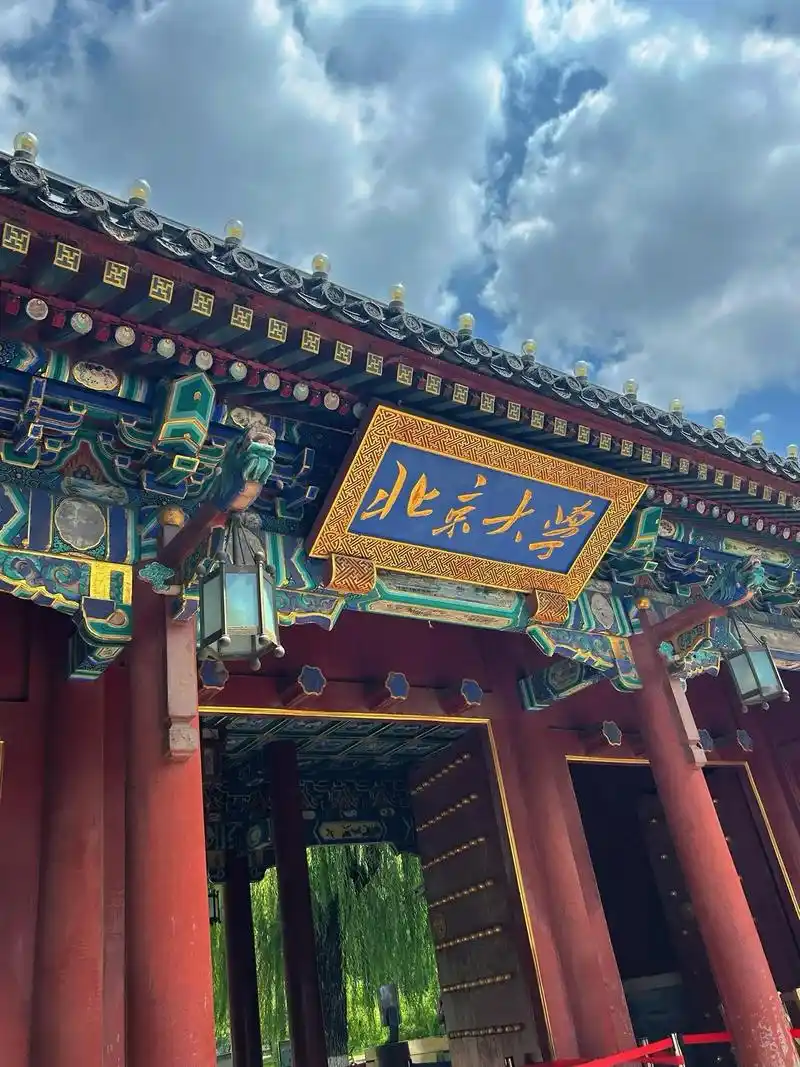
Peking University (PKU), located in Haidian District, Beijing, is a national key university jointly established by the Ministry of Education of the People's Republic of China and the Beijing Municipal Government. It is directly under the Ministry of Education and is a central university. As the first comprehensive national university in modern China, it is classified as a Class A institution under the national 'Double First-Class' initiative, and is part of the '985 Project' and '211 Project' construction universities. It is a member of the C9 League, Song League, China University Presidents Association, Pan-Asia Student Forum, Beijing-Hong Kong University Alliance, Global University High Research Institute Alliance, Asian University Alliance, Asian Student Collective Action Exchange Program, Association of East Asian Research Universities, International Alliance of Research Universities, Association of Pacific Rim Universities, Global University Presidents Forum, 21st Century Academic Alliance, East Asian Four-Country University Presidents Forum, China-Japan University Presidents Forum, International Forum of Public Universities, and China-Russia Comprehensive University Alliance. It has been selected for the independent degree authorization unit, the Everest Plan, the 101 Plan, the Elite Plan, and the pilot reform of basic discipline enrollment. Peking University was founded on July 3, 1898, originally named the Imperial University of Peking. At its inception, it served as the highest educational administrative authority of the state. In 1912, it was renamed Peking University. In 1938, it was renamed National Southwest Associated University, and it was reestablished in Beiping in 1946. Starting from 1952, it gradually became a comprehensive university focusing on arts and sciences. In 2000, Peking University merged with the former Beijing Medical University to form the new Peking University. As of 2025, Peking University has 7 faculties, covering 11 academic disciplines, 49 major categories, and 137 undergraduate programs. It has 56 first-level doctoral degree authorization points, 56 first-level master's degree authorization points, 7 professional doctoral degree authorization points, 29 professional master's degree authorization points, 262 doctoral degree programs, 285 master's degree programs, 49 national first-class disciplines, and 54 postdoctoral research stations. As of December 2023, the university had 48,587 enrolled students and a total of 12,841 faculty and staff, including 3,804 full-time teachers. In 1895, after the defeat in the First Sino-Japanese War, foreign powers were carving up China. Intellectuals at the time hoped for reform and strengthening through change, leading to the Reform Movement promoted by Kang Youwei. On June 11, 1898, Emperor Guangxu issued the 'Imperial Edict on the Determination of National Policies,' officially declaring reform and proposing the establishment of the Imperial University of Peking. On July 3, Emperor Guangxu approved the 'Memorial on the Draft Regulations of the Imperial University of Peking,' drafted by Liang Qichao, and formally established the Imperial University of Peking. He appointed Sun Jianai, Minister of Personnel and Assistant Grand Secretary (also Emperor Guangxu's tutor), as the first Superintendent of University Affairs, Xu Jingcheng as the Chinese Studies Dean, and American missionary W. A. P. Martin as the Western Studies Dean. Thus, the Imperial University of Peking became the first comprehensive university established by the central government in modern China. On September 21, Empress Dowager Cixi and conservative forces launched the Coup of 1898, leading to the failure of the Hundred Days' Reform. After the reform failed, most other reform measures were abolished, but the Imperial University of Peking was preserved. The 'Memorial on the Draft Regulations of the Imperial University of Peking,' consisting of 8 chapters and 54 articles drafted by Liang Qichao, explicitly stated the goal of making the Imperial University of Peking a world-class institution that would serve as a model for all provinces and be admired by all nations. It stipulated that all provinces should establish new-style schools under the jurisdiction of the university. The teaching content emphasized 'Chinese learning as the foundation, Western learning for practical use' and 'equal emphasis on Chinese and Western studies.' It established ten 'general subjects' such as Confucian classics and philosophy, and ten 'specialized subjects' such as mathematics and mining, while requiring all students to take a foreign language course. On December 31, 1898, the Imperial University of Peking officially opened. Originally planned to enroll 500 students, it actually only had one school for advanced scholars (Shixue Guan) admitting successful candidates in the imperial examinations, along with attached primary and secondary schools, enrolling over 160 students. The next year, the student body increased to over 200. The curriculum included both Chinese and Western studies, offering general courses in mathematics, physics, chemistry, and English, German, French, Russian, and Japanese, in addition to Chinese classics and history. Specialized lectures were also established in history, geography, and political science. In May 1900, the Boxer Rebellion reached its peak, impacting the university. In August, the invasion by the Eight-Nation Alliance caused severe damage to the Imperial University of Peking, forcing it to suspend operations for nearly two years. In 1902, the Qing government rebuilt the Imperial University of Peking, and the Tongwen Guan (School of Combined Learning), established during the Self-Strengthening Movement, was merged into the university and converted into the School of Translation. Zhang Baixi, Minister of Personnel, was appointed as the Superintendent of University Affairs. On December 17, a grand opening ceremony was held for the Normal School and the School for Advanced Scholars under the accelerated program of the Imperial University of Peking. In the same year, a library was established, making it the earliest modern university library in China. During his tenure, Zhang Baixi reformed the university, hiring renowned scholars such as Gu Hongming, Yan Fu, and Lin Shu, holding entrance examinations, and formulating a systematic academic system. In 1902, Fan Xiren, a student of the School for Advanced Scholars, took the re-examination paper for admission.
Sources & verification
- Verification
- Partly verified
- Verified on
- 2026-05-10
- Last updated
- 2026-09-24
- Source link
- www.campuschina.org ↗
- Source notes
- Official CampusChina guide (program code: 120605)
Confirm requirements, funding and deadlines in the admissions office’s current announcement.