
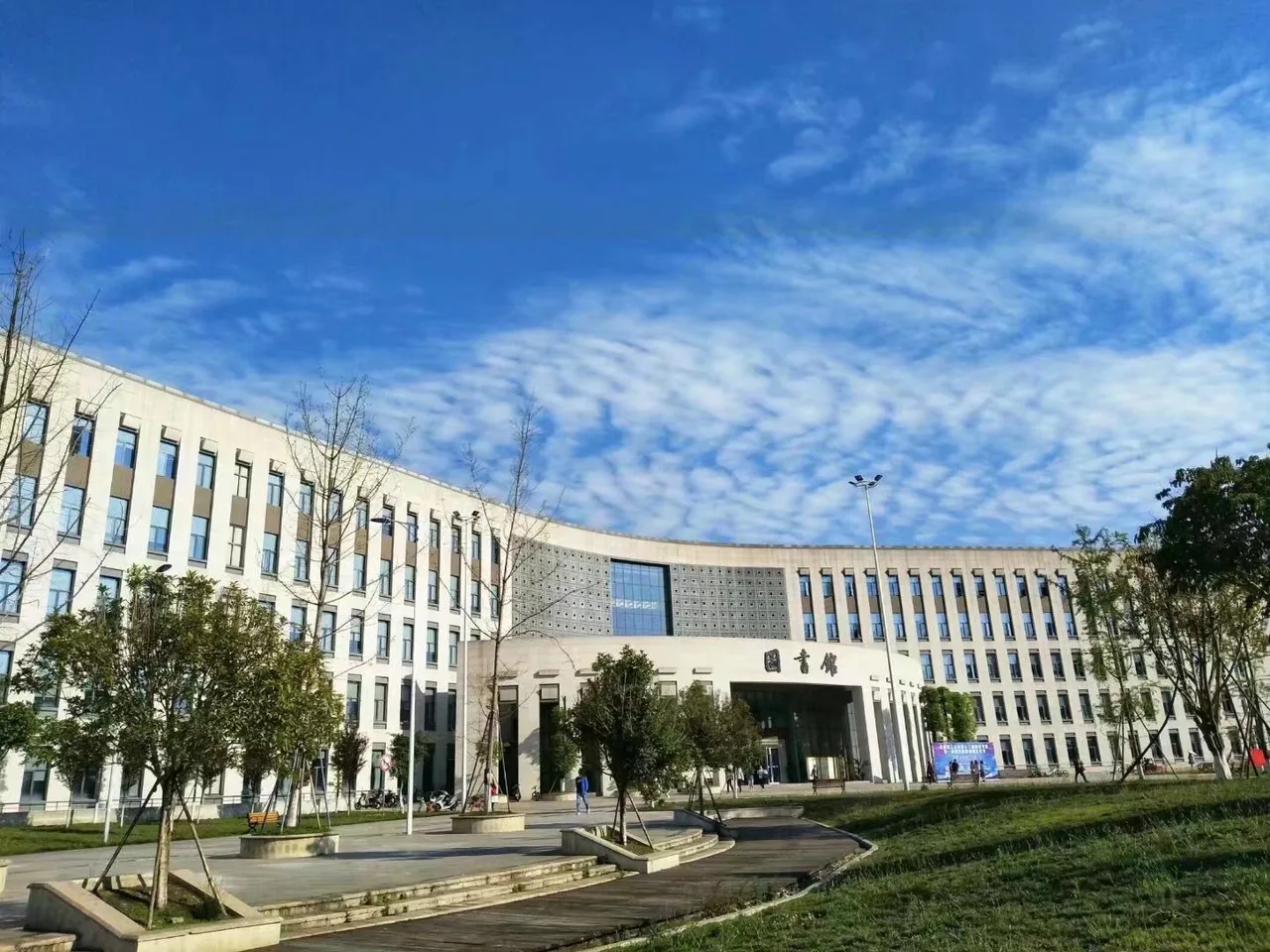
Government/University Scholarship
Chengdu University of Technology University Scholarship
Application status unknownVerified
Chengdu University of Technology University Scholarship. Eligible study levels: Master’s and Doctoral. Funding: tuition waiver + accommodation fee waiver + insurance fees paid by the university
TuitionAccommodationMedical insurance
- Scholarship type
- Government/University Scholarship
- Degree level
- Master / PhD
- Location
- Sichuan · Chengdu
- Application deadline
- Date to be confirmed
Overview
Chengdu University of Technology University Scholarship. Eligible study levels: Master’s and Doctoral. Funding: tuition waiver + accommodation fee waiver + insurance fees paid by the university
Funding coverage
Funding tiers
Eligibility may differ by tier. Check the applicable degree and requirements.
Standard funding
- Eligible degree
- Master’s, Doctoral
- Funding
- Tuition waiver + accommodation fee waiver + insurance paid by the university
- Tier requirements
- Master’s/doctoral applicants of excellent character and academic performance who meet university requirements; awarded competitively
Requirements & documents
Application dates & process
Review Cycle: Document review and interviews / expert review take approximately 4–6 weeks
Universities & programs
Universities
About the university
Chengdu University of Technology (CDUT), located in Chengdu, Sichuan Province, is under the administration of the Sichuan Provincial Department of Education. It is one of the first and second batches of national 'Double First-Class' construction universities, jointly established by the Ministry of Land and Resources and the Sichuan Provincial People's Government, and is one of the three geological institutions founded in the early days of the People's Republic of China. The predecessor of CDUT was the Chengdu Geological Exploration Institute, founded in 1956. In 1958, it was renamed Chengdu Geological College. In 1993, it was renamed Chengdu Institute of Technology. In February 1999, a postdoctoral research station for the first-level discipline of Geology was established. In 2001, it was renamed Chengdu University of Technology. The university was successively directly under the Ministry of Geology, the Ministry of Geology and Mineral Resources, and the Ministry of Land and Resources, until it was transferred to local administration in 2000. In 2010, it became a university jointly built by the Ministry of Land and Resources and the Sichuan Provincial People's Government. In 2017, it became a national first-round 'Double First-Class' construction university. In 2019, it became a 'Double First-Class' construction university jointly built by the Ministry of Education and Sichuan Province. In 2022, it became a national second-round 'Double First-Class' construction university. As of October 2024, CDUT covers an area of 3,523 mu, with two national key laboratories and other research platforms. The university has 22 teaching colleges, 67 undergraduate enrollment majors (categories), 9 first-level doctoral degree authorization points, 1 professional doctoral degree authorization point, 28 first-level master's degree authorization points, 20 professional master's degree authorization points, 6 postdoctoral research stations, 5 disciplines ranked in the top 1% of ESI globally, 1 first-level national key discipline, and 3 second-level national key disciplines. The university has 3,091 faculty and staff, and 39,169 full-time students. In March 1956, the State Council approved the establishment of the third geological institution in China in Chengdu—the Chengdu Geological Exploration Institute, based on the geology departments of Chongqing University, Northwest University, and Nanjing University, and bringing together teachers and cadres from over 30 institutions and universities including Beijing Geological College and Northeast Geological College. In the autumn of the same year, the institute enrolled 1,551 undergraduates in four majors. In October, the first opening ceremony was held. In 1957, the institute adjusted its majors, transferring some students to other universities and suspending enrollment in three majors. In the same year, second-year students from the Geology Department of Chongqing University moved in, and teachers and students from Beijing Geological College also transferred to the institute. In November 1958, the institute was renamed Chengdu Geological College. In 1960, it began enrolling graduate students and offering correspondence education in geology, adding departments such as Mechanical Engineering and Mathematics, Physics, and Chemistry, and adjusting and merging departments. In 1962, the college's leadership changed from dual leadership by the Sichuan Provincial People's Government and the Ministry of Geology to direct leadership by the Ministry of Geology. In 1965, three departments from Beijing Geological College were fully transferred to the college. In April 1966, the college stopped enrollment. In March 1972, the college began enrolling three-year regular class students, and by 1976, it had enrolled 3,073 students over five cohorts. In 1977, the college resumed full undergraduate enrollment, and in 1978, it resumed enrolling master's students. In 1979, the college's leadership system changed to joint leadership by the Ministry of Geology and the Sichuan Provincial People's Government, with the Ministry of Geology taking the lead. In 1981, the college was approved as one of the first batch of master's degree-granting units, with 8 master's degree authorization points. In 1982, the college resumed correspondence education, offering 4 majors. In 1983, the college became one of the second batch of doctoral degree-granting units, with 4 doctoral degree authorization points, and began enrolling doctoral students that year. In February 1985, with approval from the Ministry of Geology and Mineral Resources and the Sichuan Provincial Party Committee, the college began piloting a presidential responsibility system, and in the same year, established the Department of Social Sciences, the Department of Management Science, and the Department of Applied Mathematics. In 1986, Chengdu Geological College began accepting international students. In 1988, two disciplines—'Petroleum Geology and Exploration (combined with Petrology and Applied Geophysics)' and 'Engineering Geology'—were evaluated as national key disciplines. In 1991, the college implemented a system of presidential responsibility under the leadership of the Party Committee, and in the same year, established a first-level discipline postdoctoral research station. In 1992, the three specialties of Mineralogy, Petrology, and Ore Deposits became provincial key disciplines. In May 1993, the college was renamed Chengdu Institute of Technology, and in December of the same year, it was designated as a key higher education institution under the ministry. In 1995, the institute obtained the final approval authority for full professors and self-approval authority for doctoral supervisors, and was approved to build the Sichuan Provincial Key Laboratory of Geosciences and Technology. In March 1996, the Structural Geology specialty was approved as a provincial key discipline. In the same year, the institute formally signed an agreement with the Panzhihua Municipal People's Government to establish a long-term stable cooperative education relationship. In March 1997, the Environmental Engineering specialty was approved as a ministerial and provincial key discipline. In July 1997, the institute jointly established the 'Chengdu Institute of Technology Radio, Film, and Television Art College' with the Sichuan International Film and Television Culture Communication Center. In the same year, the institute established its first secondary college on the main campus—the College of Environment and Civil Engineering—beginning the optimization and reorganization of teaching resources.
Sources & verification
- Verification
- Verified
- Verified on
- 2026-09-20
- Last updated
- 2026-11-06
- Source link
- cie.cdut.edu.cn ↗
- Source notes
- Chengdu University of Technology — 2026 application guide and funding details for Chengdu University of Technology University Scholarship (verified by the user)
Confirm requirements, funding and deadlines in the admissions office’s current announcement.