
University Scholarship
Beijing Technology and Business University Silk Road Scholarship
ClosedPartly verified
**I. Scholarship Content and Standards** | Student Category | Major | Tuition/Year | Accommodation Fee/Year | Living Expenses/Month | Medical Insurance/Year | | --- | --- | --- | --- | --- | --- | | Doctoral | Food Science and Engineering | 38,000 yuan | Off-campus housing subsidy 12,000 yuan; on-campus housing free | 3,500 yuan | 800 yuan | **II. Open Major** Doctoral program in Food Science and Engineering (taught in English) **III. Applicant Qualifications** 1. Applicants must be nationals of Belt and Road Initiative countries, in good health, hold a valid foreign passport, and comply with Chinese laws, regulations, and university rules. 2. Applicants for doctoral studies must hold a master's degree and generally be under 40 years of age. 3. Applicants must meet the academic performance, research level, and language proficiency requirements of the intended major. 4. Applicants must have good moral character, no criminal record or adverse credit history in their home country or
TuitionAccommodationMedical insurance
- Scholarship type
- University Scholarship
- Degree level
- Bachelor / Master / PhD / Visiting Students
- Location
- Beijing · Beijing
- Application deadline
- 2026-04-01
Overview
**I. Scholarship Content and Standards**
| Student Category | Major | Tuition/Year | Accommodation Fee/Year | Living Expenses/Month | Medical Insurance/Year |
| --- | --- | --- | --- | --- | --- |
| Doctoral | Food Science and Engineering | 38
000 yuan | Off-campus housing subsidy 12
000 yuan
Funding coverage
Funding tiers
Eligibility may differ by tier. Check the applicable degree and requirements.
Standard funding
- Eligible degree
- Bachelor’s, Master’s, Doctoral, Visiting students
- Funding
- I. Coverage and standards | Level | Program | Tuition/year | Accommodation/year | Living allowance/month | Medical insurance/year | | --- | --- | --- | --- | --- | --- | | Doctoral | Food Science and Engineering | CNY 38,000 | Off-campus allowance CNY 12,000; on-campus accommodation free | CNY 3,500 | CNY 800 | II. Available program Doctoral Food Science and Engineering, taught in English.
- Tier requirements
- ** 1. Healthy students with nationality of Belt and Road countries, holding a valid foreign passport, compliant with Chinese laws/regulations and university rules. 2. Doctoral applicants require a master’s degree, generally age 40 or younger. 3. Grades, academic level and language ability must meet the major’s admission requirements. 4. Good character, no unlawful/criminal conduct or adverse credit record in the home country or China, reliable financial support and a guarantor handling affairs in China. **IV. Application dates** Annual deadline: April 15. **V. [source ends here]
Requirements & documents
Application dates & process
Application Deadline: 4/1 Review Cycle: Joint review by the China Scholarship Council and host university takes approximately 6–8 weeks
Universities & programs
Universities
About the university
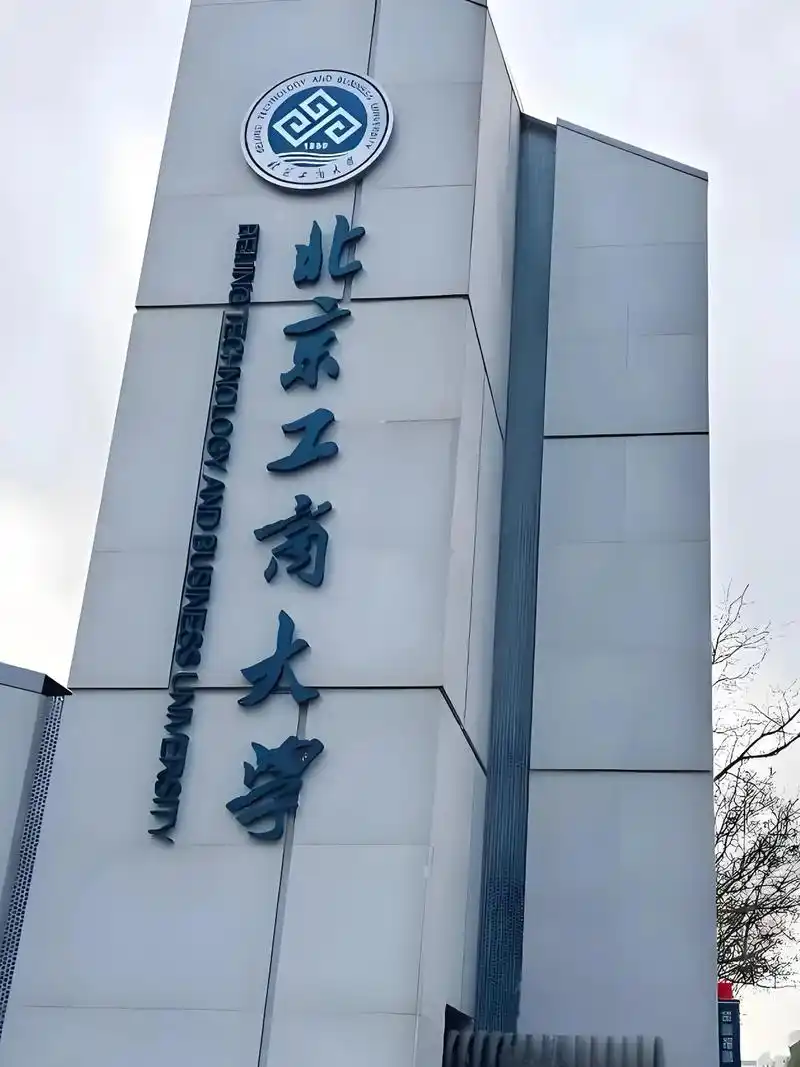
Beijing Technology and Business University (BTBU), abbreviated as Beigongshang or BTBU, is located at No. 33 Fucheng Road, Haidian District, Beijing, and is under the administration of the Beijing Municipal Education Commission. It is a high-level research university key to Beijing's development and a member of the Beijing-Tianjin-Hebei University Business Collaborative Innovation Alliance. It is the first university in China whose Food Science and Engineering program has received dual international accreditation from the Institute of Food Technologists (IFT) and the International Union of Food Science and Technology (IUFoST). The university was established in June 1999 through the merger of Beijing Institute of Light Industry, Beijing Business College, and Mechanical Industry Management Cadre College. Beijing Business College, formerly the All-China Federation of Supply and Marketing Cooperatives Cadre School (founded in early 1950) and the Central Commercial Cadre School (founded in 1953), merged in 1958. In 1959, the Ministry of Commerce, with State Council approval, established the Central Business College, which was renamed Beijing Business College in 1960. It was among the first batch of institutions authorized by the State Council to confer master's degrees, and was successively under the Ministry of Commerce and the Ministry of Internal Trade. Beijing Institute of Light Industry, founded in 1958, was one of the earliest higher education institutions for light industry in China, and was successively under the Ministry of Light Industry and the China National Light Industry Council. Mechanical Industry Management Cadre College, founded in 1982, was under the Ministry of Mechanical Industry. In May 2018, the university was authorized to confer doctoral degrees. As of January 2025, the university has two campuses, Fucheng Road and Liangxiang, with a total building area of 593,200 square meters. It comprises 4 faculties and offers 62 undergraduate programs. It has 5 postdoctoral research stations, 7 first-level doctoral degree authorization points, 19 first-level master's degree authorization points, and 22 professional master's degree authorization points. The university has 1,641 faculty and staff, including 1,120 full-time teachers, 53 postdoctoral researchers, and over 17,000 students in various degree programs. It has 5 national characteristic specialties and 8 Beijing characteristic specialty construction sites. Beijing Business College was successively under the Ministry of Commerce and the Ministry of Internal Trade, with its predecessors being the All-China Federation of Supply and Marketing Cooperatives Cadre School and the Central Commercial Cadre School. On November 30, 1949, the Central Cooperative Affairs Bureau submitted a request to the Financial and Economic Committee of the Government Administration Council to establish the Central Cooperative Affairs Bureau Cadre School; on December 6, the committee approved the request; on December 26, the school was established, with the director of the Central Cooperative Affairs Bureau, Meng Yongqian, serving concurrently as its principal. The school was located at No. 12 Hongluochang, Xisi North Street, Beijing. On July 27, 1950, it was renamed the All-China Federation of Cooperatives Cadre School. On July 25, 1954, it was renamed the All-China Federation of Supply and Marketing Cooperatives Cadre School. In mid-February 1960, the Central Business College Admissions Committee issued the Spring Enrollment Brochure, temporarily offering a four-year undergraduate program in the Department of Business Economics and a two-year junior college program in the Normal Department, recruiting from within the national commercial system. That same year, it was renamed Beijing Business College, and the Central Commercial Cadre School merged into it. In August, Beijing Refrigeration College was incorporated into Beijing Business College as the Department of Refrigeration. On October 21, the Party Group of the Ministry of Commerce approved the establishment of the Party Committee and the Academic Affairs Committee of Beijing Business College.
Sources & verification
- Verification
- Partly verified
- Verified on
- 2026-05-10
- Last updated
- 2026-09-24
- Source link
- www.campuschina.org ↗
- Source notes
- Official CampusChina guide (program code: 123952)
Confirm requirements, funding and deadlines in the admissions office’s current announcement.