
Government/University Scholarship
Huaqiao University Tanoto Belt and Road Scholarship
ClosedVerified
Huaqiao University Tanoto Belt and Road Scholarship. Eligible study levels: Bachelor’s. Funding: RMB 30,000 per person per academic year; tuition, accommodation and activity costs are paid first. A one-time study allowance of RMB 2,000 is paid each year; the remaining funds are paid monthly as a living allowance
TuitionAccommodation
- Scholarship type
- Government/University Scholarship
- Degree level
- Bachelor
- Location
- Fujian · Quanzhou
- Application deadline
- 2025-06-01
Overview
Huaqiao University Tanoto Belt and Road Scholarship. Eligible study levels: Bachelor’s. Funding: RMB 30
000 per person per academic year
tuition
accommodation and activity costs are paid first. A one-time study allowance of RMB 2
000 is paid each year
the remaining funds are paid monthly as a living allowance
Funding coverage
Funding tiers
Eligibility may differ by tier. Check the applicable degree and requirements.
Standard funding
- Eligible degree
- Bachelor’s
- Funding
- RMB 30,000 per person per academic year; tuition, accommodation and activity costs are paid first. A one-time study allowance of RMB 2,000 is paid each year; the remaining funds are paid monthly as a living allowance
- Tier requirements
- 1. Law-abiding young students from Belt and Road countries/regions with excellent character and grades and good physical and mental health; language-study applicants must be Indonesian. 2. High school educational level through formal qualification education, excellent secondary-school grades, no older than 22, meeting Huaqiao University undergraduate entry conditions. 3. Chinese proficiency required by the chosen undergraduate major (except language study). 4. Recipients of other new-student scholarships/grants may not receive this scholarship.
Requirements & documents
Application dates & process
Application Opens: 3/2 Application Deadline: 6/1 Review Cycle: Document review and interviews / expert review take approximately 4–6 weeks
Universities & programs
Universities
About the university
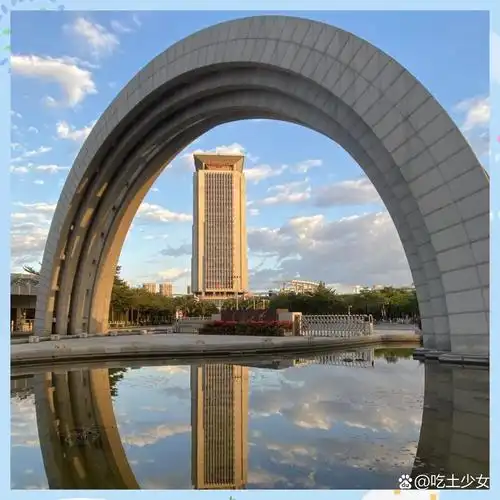
Huaqiao University (HQU) was founded in Quanzhou, Fujian Province, and has campuses in Quanzhou and Xiamen. It is a university directly under the United Front Work Department of the CPC Central Committee (Overseas Chinese Affairs Office of the State Council). Approved personally by Premier Zhou Enlai, it is a central ministry-affiliated university, a national Chinese language education base, a national language and script promotion base, and a base for the inheritance of excellent traditional Chinese culture. It is one of the earliest universities in mainland China to recruit overseas Chinese and international students, and it has one of the largest numbers of overseas students among mainland Chinese universities. In 1960, the university was approved by the state and established in Quanzhou, Fujian. In 1983, it was designated by the CPC Central Committee as a 'National Key Supported University'. In 1996, it was jointly built by the Overseas Chinese Affairs Office of the State Council and the Fujian Provincial People's Government. The Xiamen campus was opened in 2006. In 2018, it was selected as a Fujian Province 'Double First-Class' construction university. In 2019, it was jointly built by the United Front Work Department of the CPC Central Committee, the Ministry of Education of the People's Republic of China, and the Fujian Provincial People's Government. In 2022, it was selected as a Fujian Province 'Double First-Class' construction A-class university. The university is a key construction university in Fujian Province and a key construction high-level university in Fujian Province. It has been selected for the National '111 Plan', the National Key Research and Development Program, the National Characteristic Key Discipline Project, the first batch of national new engineering research and practice projects, the first batch of new liberal arts research and reform practice projects, the National High-level University Public-funded Graduate Program, the Chinese Government Scholarship host institution for international students, and the 21st Century Maritime Silk Road Chinese Language Education Alliance. As of December 2023, the university covers a total area of 2,197,700 square meters, with a total building area of 1,223,700 square meters. As of December 2024, the university has 27 colleges, 68 undergraduate programs, 11 first-level doctoral degree programs, 26 first-level master's degree programs, 26 professional master's degree programs, and 5 postdoctoral research stations. It has 2,949 faculty and staff, 28,621 full-time undergraduate students, 7,926 graduate students, and 9,045 students from Hong Kong, Macao, Taiwan, overseas Chinese, and foreign countries. In the early days after the founding of New China, overseas Chinese, especially young overseas Chinese, set off a wave of returning to China to build the new country. Coupled with the anti-Chinese sentiment in Southeast Asia, a large number of young overseas Chinese were forced to return. Considering that these returned overseas Chinese youth needed to learn culture, science, and technology, Liao Chengzhi, then director of the Overseas Chinese Affairs Commission, suggested to the state the establishment of a university mainly for returned overseas Chinese students. With the approval and strong support of Premier Zhou Enlai and various central ministries and commissions, Huaqiao University was founded in 1960 in response to the needs of the times. On August 17, 1961, the Overseas Chinese Affairs Commission and the Ministry of Education jointly submitted the 'Plan for the Establishment of Huaqiao University' to the State Council, which was officially approved on November 1. The university was located in Quanzhou, Fujian Province, under the leadership of the Overseas Chinese Affairs Commission of the People's Republic of China. The first president was concurrently held by Liao Chengzhi, director of the Overseas Chinese Affairs Commission. The academic system was 5 years (6 years for the medical program). In the fall of 1961, the Department of Mathematics (Applied Mathematics) and the Department of Chemistry (Chemistry) were added, and classes were held at the Jimei Overseas Chinese Remedial School. After the campus buildings were gradually completed, the university moved back to Quanzhou. From 1962 to 1965, the university successively added the Department of Political Science (Political Education), Department of Physics (Physics), Department of Tropical Crops (Tropical Crop Cultivation), Department of Medicine (Medical), Department of Civil Engineering and Architecture (Industrial and Civil Construction and Farmland Water Conservancy), Department of Chemical Engineering (Inorganic Chemical Engineering and Basic Organic Synthesis), and Department of Foreign Languages (Indonesian, English, and Japanese). In 1963, overseas Chinese raised funds to build the Tan Kah Kee Memorial Hall, which was completed in 1983. The memorial hall stands in the center of the campus and serves as the main building of the university.
Sources & verification
- Verification
- Verified
- Verified on
- 2026-09-20
- Last updated
- 2026-11-06
- Source link
- zsc.hqu.edu.cn ↗
- Source notes
- Huaqiao University — 2025 application guide and funding details for Huaqiao University Tanoto Belt and Road Scholarship (verified by the user)
Confirm requirements, funding and deadlines in the admissions office’s current announcement.