
University Scholarship
University of Science and Technology Beijing Dingxin Scholarship
Application status unknownPartly verified
**Scholarship Content and Standards** - Full scholarship, including tuition, on-campus dormitory, medical insurance, and living expenses (PhD students: 3,500 RMB/month; Master's students: 3,000 RMB/month). - Partial scholarship **Open Majors** All Master's and PhD programs at the University of Science and Technology Beijing are eligible for application. **Applicant Qualifications** 1. Must be non-Chinese citizens in good health; 2. For Master's degree applicants: must hold a bachelor's degree and be under 35 years of age; 3. For PhD degree applicants: must hold a master's degree and be under 40 years of age. **Application Period** March 1 to April 30 each year. **Application Procedure** Please visit http://isc.ustb.edu.cn/cn/template.jsp?id=153 **Required Application Materials** Please visit http://isc.ustb.edu.cn/cn/template.jsp?id=153 **Responsible Office** Office 107, International Student Center, University of Science and Technology Beijing **Contact Information** Of
TuitionLiving allowance 3500 CNYMedical insurance
- Scholarship type
- University Scholarship
- Degree level
- Bachelor / Master / PhD / Visiting Students
- Location
- Beijing · Beijing
- Application deadline
- Date to be confirmed
Overview
**Scholarship Content and Standards**
- Full scholarship
including tuition
on-campus dormitory
medical insurance
and living expenses (PhD students: 3
Funding coverage
Funding tiers
Eligibility may differ by tier. Check the applicable degree and requirements.
Full scholarship
- Eligible degree
- Doctoral
- Funding
- Full scholarship including tuition, on-campus dormitory accommodation, medical insurance and living allowance (RMB 3,500 per month for doctoral students and RMB 3,000 per month for master’s students). l
- Tier requirements
- ** 1. Healthy non-Chinese citizens; 2. Master’s: bachelor’s degree, no older than 35; 3. Doctoral: master’s degree, no older than 40; **Application dates** March 1–April 30 annually. **Application process** See http://isc.ustb.edu.cn/cn/template.jsp?id=153 **Required materials** See http://isc.ustb.edu.cn/cn/template.jsp?id=153 **Receiving department** Office 107, International Student Center, University of Science and Technology Beijing **Contact** Office 107, International Student Center, University of Science and Technology Beijing Address: 30 Xueyuan Road, Haidian District, Beijing, China Postcode: 100083 Telephone:+86-10-62332694 Fax:+86-10-62327878 Email:admission@ustb.edu.cn Website: [http://isc.ustb.edu.cn](http://isc.ustb.edu.cn/)
Partial scholarship
- Eligible degree
- Doctoral
- Funding
- Partial scholarship Available programs Applications are accepted for all master's and doctoral programs at the University of Science and Technology Beijing. Applicant eligibility 1. Non-Chinese citizens in good health. 2. Master's applicants must hold a bachelor's degree and be aged 35 or younger. 3. Doctoral applicants must hold a master's degree and be aged 40 or younger. [source ends with an incomplete heading]
- Tier requirements
- ** 1. Healthy non-Chinese citizens; 2. Master’s: bachelor’s degree, no older than 35; 3. Doctoral: master’s degree, no older than 40; **Application dates** March 1–April 30 annually. **Application process** See http://isc.ustb.edu.cn/cn/template.jsp?id=153 **Required materials** See http://isc.ustb.edu.cn/cn/template.jsp?id=153 **Receiving department** Office 107, International Student Center, University of Science and Technology Beijing **Contact** Office 107, International Student Center, University of Science and Technology Beijing Address: 30 Xueyuan Road, Haidian District, Beijing, China Postcode: 100083 Telephone:+86-10-62332694 Fax:+86-10-62327878 Email:admission@ustb.edu.cn Website: [http://isc.ustb.edu.cn](http://isc.ustb.edu.cn/)
Requirements & documents
Application dates & process
Review Cycle: Joint review by the China Scholarship Council and host university takes approximately 6–8 weeks
Universities & programs
Universities
About the university
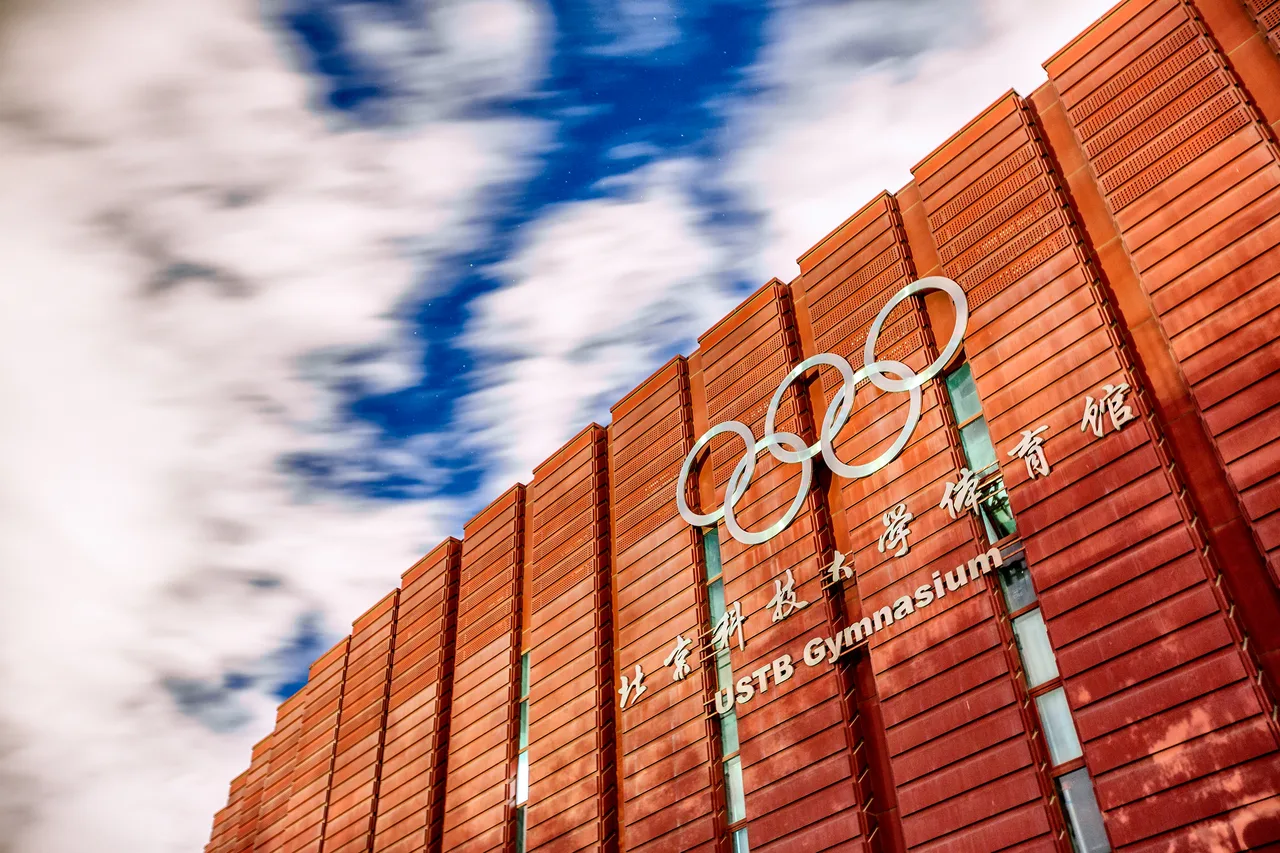
University of Science and Technology Beijing (USTB), also known as Beike or Beijing Keji Daxue, is a multidisciplinary research university located in Beijing, directly under the Ministry of Education. Founded in 1952, USTB was established by merging the mining and metallurgy departments of six prestigious Chinese universities, including Tianjin University (formerly Peiyang University) and Tsinghua University, and was initially named Beijing Iron and Steel Industry Institute. In 1960, it was renamed Beijing Iron and Steel Institute and designated as a national key university. In 1984, it became one of the first universities in China to establish a graduate school. In 1988, it was renamed University of Science and Technology Beijing. In May 1997, USTB was among the first batch of universities to enter the national "211 Project". In 2006, it became one of the first universities under the "985 Project" for building platforms of advantageous disciplines. In 2017, USTB was selected into the national "Double First-Class" initiative. In 2018, it was approved as a co-built university by the State Administration of Science, Technology and Industry for National Defense and the Ministry of Education. In December 2024, USTB established the Institute for Mass Organization Development. As of December 2025, the university covers an area of approximately 803,900 square meters, with a total building area of 996,800 square meters. It has 23 schools and offers 68 undergraduate programs. It has 21 first-level doctoral degree authorization points, 32 first-level master's degree authorization points, 5 professional doctoral degree authorization points, 21 professional master's degree authorization points, and 19 postdoctoral research stations. The library holds over 2.624 million physical volumes. The university has a total of 3,762 faculty and staff, and over 27,000 full-time students. The historical roots of USTB can be traced back to 1895 when the first mining and metallurgy discipline in modern Chinese history was established at Peiyang Western Academy. In January 1952, the Ministry of Education held a national conference on geology, mining, and metallurgy departments, planning to establish specialized colleges in the Beijing-Tianjin region. On April 22, Director Liu Bin of the Iron and Steel Bureau of the Central Heavy Industry Ministry chaired the first preparatory meeting for the Iron and Steel Institute. On August 4, the Ministry of Education instructed that an iron and steel institute be established in Beijing within the year, temporarily attached to Tsinghua University, consolidating the mining and metallurgy departments (or groups) from five universities: Tianjin University, Tangshan Railway Institute, Shanxi University, Beijing Institute of Technology, and Northwest Institute of Technology. On August 9, the Ministry of Education further instructed that the metal group of the first and second year students of the Mining Department of Tsinghua University be transferred to the Iron and Steel Institute, expanding the foundation to six institutions. On August 21, the Financial and Economic Committee of the Central People's Government approved the outline plan for the institute, which proposed 7 departments and 16 majors, with a target of 5,000 undergraduates and 200 postgraduates. In September of the same year, enrollment began nationwide. By the end of 1952, according to the student statistics table, the newly established Iron and Steel Industry Institute had 4 grades, 4 departments, 9 majors, and 1 specialized program in iron and steel machinery, with a total of 848 students. In 1952, the USTB library was located on the fourth floor of the Biology Building at Tsinghua University. On May 11, 1953, construction of the Beijing Iron and Steel Industry Institute began at the new site in Manjing Village, with a planned area of over 550,000 square meters. From September 23 to 27, the institute moved from Tsinghua University to the new site, and classes began on October 8. By the end of 1953, the institute had 5 departments and 9 majors (specializations), with about 1,700 students and 600 faculty and staff. In December, the institute selected and enrolled its first batch of 70 graduate students from recent graduates of Northeast Institute of Technology and Harbin Institute of Technology. On August 5, 1954, the first batch of undergraduate students graduated. In the same year, the institute began admitting international students. Starting that year, the undergraduate program was extended to five years. On February 11, 1955, the institute launched its guiding publication "Beijing Iron and Steel Institute". In 1956, the institute had five departments: Metallurgy, Technology, Mechanical Engineering, Mining, and Physical Chemistry, with over 340 teachers distributed across 27 teaching and research sections. That year, 24 graduate students graduated. On August 17, 1958, Premier Zhou Enlai accompanied Prince Norodom Sihanouk, head of the delegation of the Kingdom of Cambodia, on a visit to the institute. In 1953, the USTB library was located at the new site in Manjing Village. On February 1, 1960, according to a document from the Ministry of Metallurgical Industry, the school was renamed Beijing Iron and Steel Institute. On October 22, it was approved as a national key university. By the end of the year, the institute had 6 departments and 26 majors, graduating 973 undergraduates and 7 postgraduates. In July 1961, the institute added a precision alloy major and formed the Special Metallurgy Department. By the end of 1965, the institute had 6 departments and 15 majors: Metallurgy, Mining, Mechanical Engineering, Metallography, Pressure Processing, and Physics and Chemistry. It also had four factories: Metallurgy, Rolling, Machinery, and Repair, with 184 workers. In May 1972, the Ministry of Metallurgy approved the establishment of the first oxygen lance nozzle laboratory in China, which later conducted fluid dynamics tests on converter oxygen lance nozzles for many steel plants and began designing new nozzles. In July, the institute added five majors: Mechanical Manufacturing Technology and Equipment, Oxygen Production Equipment and Technology, Metallurgical Automation Instruments, Computer Applications, and Metal Corrosion and Protection. By the end of September 1975, with approval from the Ministry of Metallurgy, the institute established the Continuous Rolling Automation Research Laboratory. The hot strip rolling computer control group achieved the first computer-controlled hot strip rolling test mill in China. In November, the institute established the Automation Department with three majors: Industrial Automation Engineering, Industrial Automation Instruments, and Computer Engineering. Within the Physics and Chemistry Department, the Metal Corrosion and Protection major was added. By the end of December 1976, the institute had 136 research projects, including 14 national key projects, 98 projects assigned by ministries and Beijing municipality, and 24 cooperative projects with factories and mines, with 20 projects achieving significant results. In September 1980, the institute had 6 departments and 1 basic studies division, offering 18 majors: Mining, Metallurgy, Metal Materials, Mechanical Engineering, Automation, Physical Chemistry, and Basic Studies. The institute began implementing regulations for student course exemptions and electives. On January 14, 1981, with approval from the Ministry of Metallurgy, the institute formally established the Mining Research Institute, Metallurgy Research Institute, Metal Materials Research Institute, and Mechanical Engineering Research Institute. On March 25, the institute established the Management Science Department. On November 3, with approval from the Academic Degrees Committee of the State Council, the institute was among the first to have 8 doctoral degree-granting disciplines and 17 master's degree-granting disciplines (including the 8 doctoral disciplines). On January 13, 1984, with approval from the Academic Degrees Committee, the institute added 3 master's degree-granting disciplines. On July 12, following the Ministry of Education's notice on establishing graduate schools at 22 key national universities, the institute announced the establishment of the Beijing Iron and Steel Institute Graduate School.
Sources & verification
- Verification
- Partly verified
- Verified on
- 2026-05-10
- Last updated
- 2026-09-24
- Source link
- www.campuschina.org ↗
- Source notes
- Official CampusChina guide (program code: 121453)
Confirm requirements, funding and deadlines in the admissions office’s current announcement.