
Government/University Scholarship
CIS A - Master's Program in Foreign Translation
Application status unknownNot verified
The CIS Scholarship offers excellent benefits for international students pursuing a Master of Translation in China, a top choice for language majors worldwide.
TuitionAccommodationMedical insurance
- Scholarship type
- Government/University Scholarship
- Degree level
- Bachelor / Master / PhD
- Location
- Shanghai · Shanghai
- Application deadline
- Date to be confirmed
Overview
The CIS Scholarship offers excellent benefits for international students pursuing a Master of Translation in China
a top choice for language majors worldwide.
Funding coverage
Funding tiers
Eligibility may differ by tier. Check the applicable degree and requirements.
Category A
- Eligible degree
- Master’s
- Funding
- Category A—Master’s Training Program for Foreign Translators (Master’s Training Program for Foreign Translators). The program develops outstanding talent with advanced bilingual proficiency, command of Chinese and translation skills. Confucius Institutes, HSK examination centers, relevant overseas educational institutions, university Chinese departments, international Chinese teaching and training associations, and Chinese embassies and consulates may recommend outstanding graduates, translators and professionals for master’s degrees in Translation in China. Scholarship type Confucius Institute Scholarship (CIS), now the International Chinese Language Teachers Scholarship [the source contains an apparent typo in now]. Eligible Applicants The scholarship supports outstanding foreign students seeking an international master’s degree in Translation in China. Participating universities include: Beijing Foreign Studies University Beijing Language and Culture University Guangdong University of Foreign Studies Shanghai International Studies University Dalian University of Foreign Languages Beijing International Studies University Tianjin Foreign Studies University Xi’an International Studies University Confucius Institute Scholarship (CIS)
- Tier requirements
- Meets the visa, health and academic requirements for study in China
Category A
- Eligible degree
- Master’s
- Funding
- Category A—Foreign Translation Master’s Training Program is popular among language professionals [program name provisionally translated]. Scholarship Coverage Confucius Institute Scholarship (CIS)
- Tier requirements
- Meets the visa, health and academic requirements for study in China
Category A
- Eligible degree
- Master’s
- Funding
- Category A—Master’s Training Program for Foreign Translators covers: Full tuition waiver Free on-campus accommodation Comprehensive medical insurance Monthly living subsidy: RMB 3,000 (12 months/year) Funding duration: two to three years, according to each university’s standard program duration Note: recipients must undergo annual review and meet the standards to continue receiving the scholarship in the next academic year. Application and Enrollment Dates Application period: the CIS system opens on March 1 each year, with a mid-June deadline. Check the chosen university’s specific admissions plan to confirm the deadline. Enrollment: successful scholarship applicants enroll in September. Application requirements Basic Conditions Non-Chinese citizens Friendly toward China and no criminal record Comply with Chinese laws and regulations and university rules Good physical and mental health, good conduct and excellent academic performance Priority for applicants with translation experience Education and Age Requirements Applicants must hold a bachelor’s degree or higher qualification in Chinese, Translation or a related major No older than 40 Language Proficiency Requirements Provide HSK Level 6 with at least 180 points, or equivalent language proficiency recognized by the university. Application materials Apply for the Confucius Institute Scholarship (CIS)
- Tier requirements
- Meets the visa, health and academic requirements for study in China
Category A
- Eligible degree
- Master’s
- Funding
- Category A—Master’s Training Program for Foreign Translators requires: Passport copy ID photograph Foreigner Physical Examination Form, valid within six months Certificate of no criminal record, valid within six months; Bachelor’s degree certificate Academic transcripts HSK and HSKK certificates, valid within two years Two recommendation letters from professors or associate professors Study and research plan Supplementary materials, if any: professional qualification certificates, employment certification and research results Note: documents in languages other than Chinese or English require notarized Chinese or English translations. Application Procedure Create an account and complete the form through the Confucius Institute Scholarship Online Application System: http://www.chinese.cn/. Submit materials according to the chosen university’s specific requirements. Track application status in the system. An interview may be required; details will be emailed. CLEC appoints an expert panel to assess academic performance, particularly HSK results, and other conditions. Results are announced approximately three months before enrollment. Recipients must confirm admission with the university and assist with procedures for study in China. Scholarship Notes Accommodation: recipients are assigned double rooms. Students approved to live off campus receive RMB 700/month in accommodation subsidy. Monthly Living Subsidy: Students enrolling before the 15th of the month receive a full month’s subsidy; Students enrolling after the 15th receive half a month’s subsidy. Absence: students leaving China for personal reasons for more than 15 days during the semester, excluding summer and winter holidays, receive no living subsidy during their absence. Termination: students withdrawing for personal reasons or expelled for disciplinary reasons immediately lose their scholarship and living subsidy. Graduating students: receive half a month’s living subsidy based on the graduation date determined by the university. Annual review: recipients must undergo annual review to continue receiving the scholarship. How to Improve Your Chances of Success If you lack time to research or handle the Confucius Institute Scholarship (CIS)... [source ends here]
- Tier requirements
- Meets the visa, health and academic requirements for study in China
Category A
- Eligible degree
- Master’s
- Funding
- For Category A — Master's Training Program for Foreign Translators, the source invites applicants to contact Riba, which it describes as a leading China scholarship application service in Vietnam. Facebook: Du học Trung Quốc Riba.vn Website: https://riba.vn Phone: 0888 666 350 | 0888 666 152 Related information: Riba's 2024 scholarship statistics. The source also promotes studyinchina.net as a reliable, accurate portal for Chinese university and scholarship information and directs readers to its scholarship search section for more opportunities.
- Tier requirements
- Meets the visa, health and academic requirements for study in China
Requirements & documents
Application dates & process
Review Cycle: As specified in each host university’s admissions brochure
Universities & programs
Universities
About the university
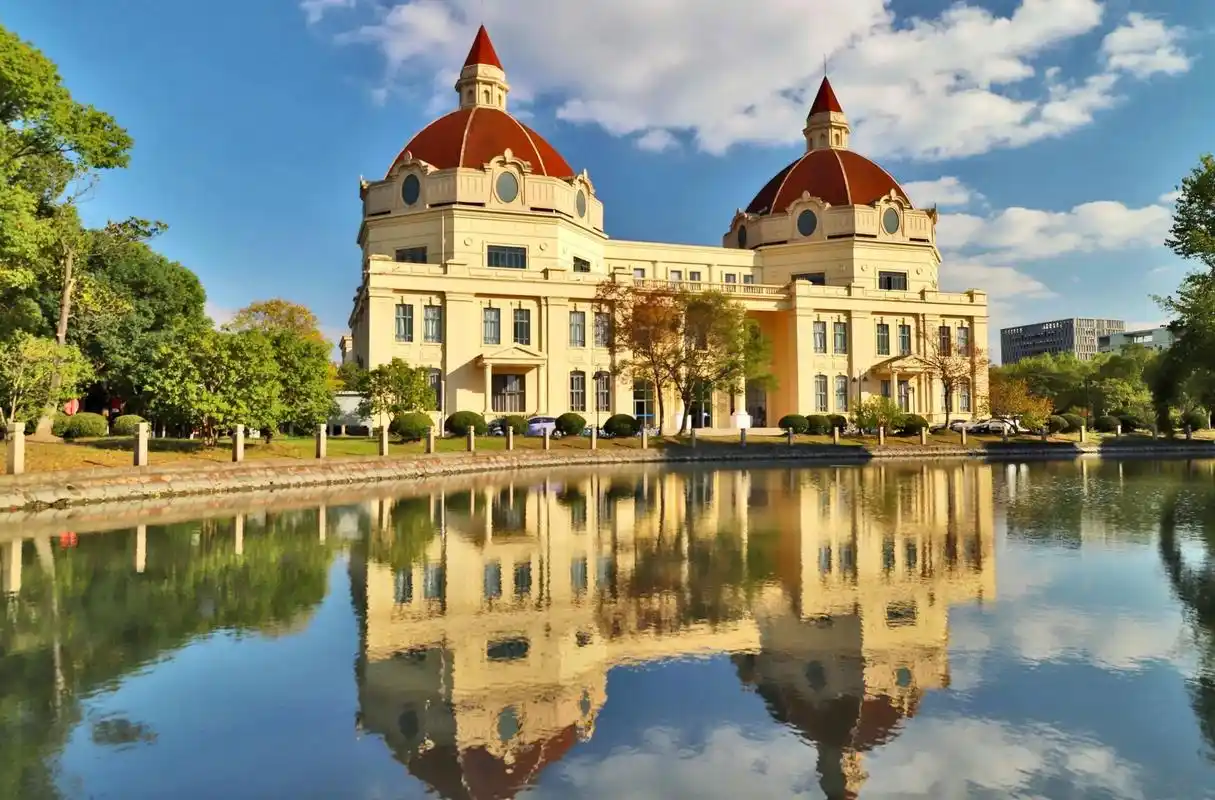
Shanghai International Studies University (SISU), commonly referred to as "Shangwai" or "SISU," is the first institution of higher education in foreign languages established after the founding of the People's Republic of China. It is a national public full-time regular institution of higher learning, a national key university directly under the Ministry of Education and jointly built with Shanghai Municipality. Its registered address is No. 550, West Dalian Road, Shanghai. SISU is a signatory university to the United Nations Memorandum of Understanding and a partner of the Directorate-General for Interpretation of the European Commission. It is also a member of the International Association of Conference Interpreters (CIUTI) and offers all six official language pairs of the United Nations, receiving the highest global rating from the International Association of Conference Interpreters (AIIC). Distinguished scholars such as Jiang Chunfang, Li Linsi, Xia Zhongyi, Fang Zhong, and Xu Zhongnian have taught at SISU. SISU traces its origins to the Shanghai Russian School attached to the East China People's Revolutionary University, founded in December 1949. In 1950, it was renamed the Foreign Language Specialized School attached to the East China People's Revolutionary University; in 1952, it became the Shanghai Russian Specialized School; in 1956, it was renamed Shanghai Foreign Language Institute; in 1963, it was listed as a national key university; and in 1994, it was renamed Shanghai International Studies University. In 1996, it was designated as a key university under China's "211 Project," and in 2017, it was selected for China's "Double First-Class" initiative. As of September 2024, SISU has two campuses, Hongkou and Songjiang, covering an area of 74.7 hectares. The university has 23 teaching faculties (departments), one national "Double First-Class" discipline, 56 undergraduate programs, 42 secondary discipline master's degree authorization points, 10 professional master's degree authorization points, 4 first-level discipline doctoral degree authorization points, 22 secondary discipline doctoral degree authorization points, 2 professional doctoral degree authorization points, 3 postdoctoral research stations, 1,601 faculty and staff members, and a total of 13,741 students of various types. After the founding of the People's Republic of China, to learn from and draw on the experience of Soviet socialist construction and to meet the urgent need for a large number of Russian-language talents, Comrade Chen Yi, then Mayor of Shanghai, advocated the establishment of a school to cultivate Russian-language talents based on the Fourth Department of the East China People's Revolutionary University. With the approval of the East China Bureau of the Central Committee of the Communist Party of China and the Shanghai Municipal Committee, the "Shanghai Russian School attached to the East China People's Revolutionary University" was officially established in December 1949, becoming the first higher education institution in foreign languages founded after the founding of the People's Republic of China. The Shanghai Municipal Committee appointed Comrade Jiang Chunfang, then president of the Shidai Publishing House, as the first president. The initial campus was located on Baoshan Road (formerly the Second College of Jinan University). The Shanghai Russian School was a foreign language university focusing on the study of Russian and Russian-Soviet literature, training students mainly as Russian interpreters, translators, and teachers. Following Comrade Chen Yi's instructions and to meet the needs of China's foreign affairs and foreign trade, the school added an English class in 1950 and was renamed the "Foreign Language Specialized School attached to the East China People's Revolutionary University," with the campus relocated to East Tiyuhui Road (formerly the First College of Jinan University). In April 1951, the school established the Department of Southeast Asian Languages, adding programs in Burmese, Vietnamese, and Indonesian. In March 1952, over 150 students from the Foreign Language Specialized School attached to the Political Department of the East China Military Region were merged into the school. By August 1952, the school offered five languages: Russian, English, Burmese, Vietnamese, and Indonesian. Starting from the second half of 1952, national higher education institutions implemented unified enrollment and began departmental adjustments. According to the instructions of the Ministry of Education, all faculty and students of the Department of Southeast Asian Languages were transferred to Peking University, leaving only the Russian program. In September of the same year, the school was renamed "Shanghai Russian Specialized School," and in November, it was again renamed "Shanghai Russian College," with a fixed three-year academic system. During this period, the school's teaching transitioned from training-style to formalized teaching, establishing and improving teaching organizations, abolishing the comprehensive Russian teaching and research office, and setting up 10 teaching and research groups for practical courses, translation, literary history, linguistics, etc. Unified syllabi were developed, and a student registration management system was established. By June 1956, the number of faculty members reached 241 (90 Soviet teachers and 151 Chinese teachers), and a total of 3,998 students had been enrolled in seven cohorts, with 2,087 graduating, supplying a number of Russian-language talents to various sectors of China. In 1956, the school was renamed "Shanghai Foreign Language Institute," adding programs in English, French, and German, with the academic system changed to four years. In 1958, the institute accepted commissions from the Shanghai Municipal Committee's Finance and Trade Department and the Shanghai Foreign Trade Bureau to establish the Department of Foreign Trade and Foreign Languages, offering six languages including English, German, and French. On September 12, 1963, with central approval, Shanghai Foreign Language Institute was listed as a national key university under the direct leadership of the Ministry of Education. On October 31, 1964, at the 148th plenary session of the State Council, signed by Premier Zhou Enlai, Comrade Wang Jiyu was appointed as the president of Shanghai Foreign Language Institute, becoming the first president appointed by the State Council. During this period, the institute also added a preparatory department for students going abroad and jointly established an affiliated foreign language school and an affiliated foreign language primary school with the Shanghai Municipal Education Bureau. After the start of the "Cultural Revolution," SISU began the so-called "suspension of classes to make revolution" in June 1966, rendering party and administrative work impossible and halting teaching and research. In 1970, the institute launched pilot classes. In 1972, it officially resumed enrollment. In 1973, it added a program in Albanian. This marked the beginning of the reconstruction of teaching order and the recovery of teaching work. In October 1976, with the fall of the "Gang of Four," the decade-long turmoil ended, and SISU's teaching work began to develop anew. In 1979, the institute restored the four-year academic system, began recruiting graduate students for degrees, reinstated the preparatory department for students going abroad, and established the Shanghai Foreign Language Education Press, various research institutions, a library and information center, and a foreign language examination center. In the same year, it jointly founded the Shanghai Foreign Language Institute Branch (later the International Business College of the former Shanghai University) with the Xuhui District Government.
Sources & verification
- Verification
- Not verified
- Verified on
- 2026-09-21
- Last updated
- 2026-09-24
- Source link
- studyinchina.net ↗
- Source notes
- Compiled from public StudyInChina information (source ID: dd261c26-977f-4646-86fe-146463afdb01)
Confirm requirements, funding and deadlines in the admissions office’s current announcement.