
University Scholarship
East China University of Science and Technology President Scholarship for International Students
Application status unknownPartly verified
1. Scholarship Content and Standards East China University of Science and Technology (ECUST) has offered the President Scholarship for International Students since 2016, providing 8 scholarship slots annually to attract outstanding international students to pursue master's and doctoral programs. 1) Full Scholarship: 3 slots, based on the Chinese Government Scholarship full scholarship, to support outstanding doctoral students. 2) Partial Scholarship: 5 slots, based on the Shanghai Municipal Government partial scholarship standard, to support outstanding master's students. 2. Open Majors All master's and doctoral programs are open for application, with priority given to key disciplines of the university. The duration of study follows the respective program's training plan. 3. Applicant Qualifications 1) Non-Chinese citizens in good health. 2) Applicants for doctoral programs must hold a master's degree and generally be under 40 years of age; applicants for master's programs must
Funding details pending.
- Scholarship type
- University Scholarship
- Degree level
- Bachelor / Master / PhD / Visiting Students
- Location
- Shanghai · Shanghai
- Application deadline
- Date to be confirmed
Overview
1. Scholarship Content and Standards
East China University of Science and Technology (ECUST) has offered the President Scholarship for International Students since 2016
providing 8 scholarship slots annually to attract outstanding international students to pursue master's and doctoral programs.
1) Full Scholarship: 3 slots
based on the Chinese Government Scholarship full scholarship
to support outstanding doctoral students.
Funding coverage
Funding tiers
Eligibility may differ by tier. Check the applicable degree and requirements.
Full scholarship
- Eligible degree
- Bachelor’s, Master’s, Doctoral, Visiting students
- Funding
- Full scholarship: 3 places, with reference to the Chinese Government Scholarship
- Tier requirements
- ** 1) Non-Chinese citizens in good health; 2) Doctoral applicants must already hold a master’s degree and generally be no older than 40; master’s applicants must already hold a bachelor’s degree and generally be no older than 35; 3) Not concurrently receiving any other scholarship. **4. Application dates** April 1–May 15 annually. **5.** **
Full scholarship
- Eligible degree
- Doctoral
- Funding
- Full scholarship to support outstanding international doctoral students; 2)
- Tier requirements
- ** 1) Non-Chinese citizens in good health; 2) Doctoral applicants must already hold a master’s degree and generally be no older than 40; master’s applicants must already hold a bachelor’s degree and generally be no older than 35; 3) Not concurrently receiving any other scholarship. **4. Application dates** April 1–May 15 annually. **5.** **
Partial scholarship
- Eligible degree
- Bachelor’s, Master’s, Doctoral, Visiting students
- Funding
- Partial scholarship: 5 places, with reference to the Shanghai Municipal Government … [source fragment]
- Tier requirements
- ** 1) Non-Chinese citizens in good health; 2) Doctoral applicants must already hold a master’s degree and generally be no older than 40; master’s applicants must already hold a bachelor’s degree and generally be no older than 35; 3) Not concurrently receiving any other scholarship. **4. Application dates** April 1–May 15 annually. **5.** **
Partial scholarship
- Eligible degree
- Doctoral
- Funding
- Partial scholarship funding for outstanding international master’s students. **2.** **Available majors** Applications are accepted for all master’s and doctoral majors, with priority … [source fragment]
- Tier requirements
- ** 1) Non-Chinese citizens in good health; 2) Doctoral applicants must already hold a master’s degree and generally be no older than 40; master’s applicants must already hold a bachelor’s degree and generally be no older than 35; 3) Not concurrently receiving any other scholarship. **4. Application dates** April 1–May 15 annually. **5.** **
Requirements & documents
Application dates & process
Review Cycle: Joint review by the China Scholarship Council and host university takes approximately 6–8 weeks
Universities & programs
Universities
About the university
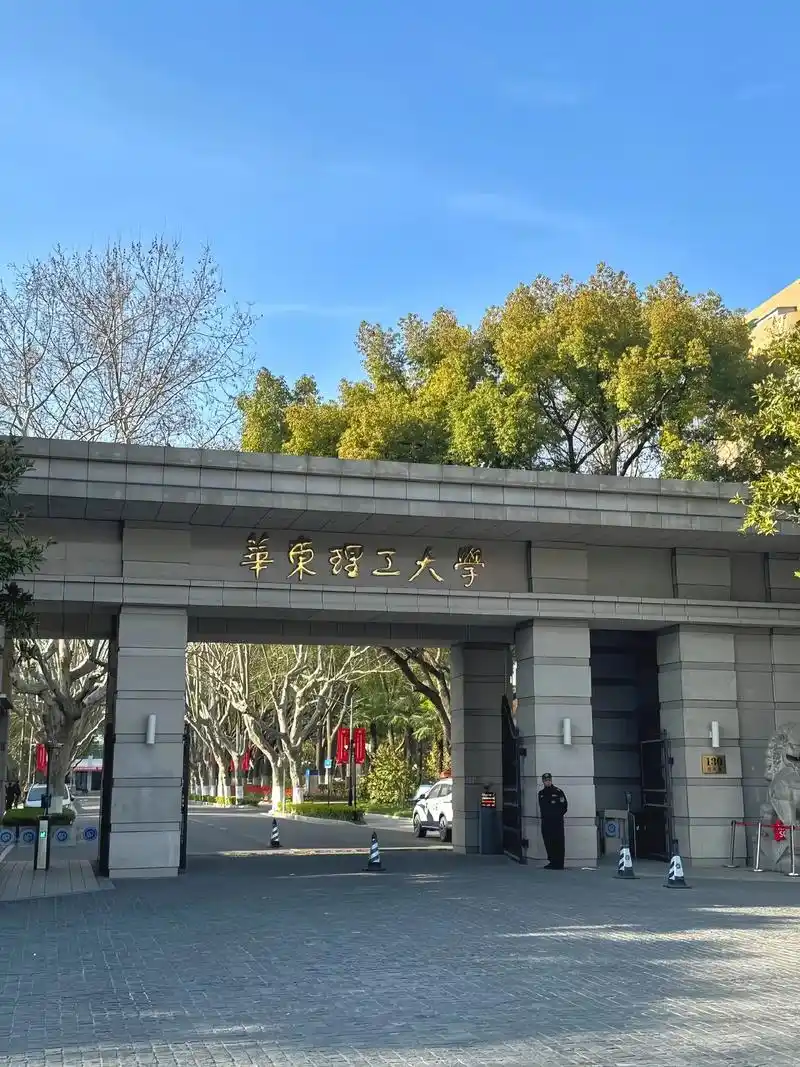
East China University of Science and Technology (ECUST), located in Shanghai, is a national key university directly under the Ministry of Education of the People's Republic of China. It is a key institution in the national "211 Project" and a "Double First-Class" construction university. It has been selected for the "111 Plan," the Excellent Engineer Education and Training Program, and is among the first batch of pilot units for the national specialized technology transfer institutions in universities. Originally known as East China Institute of Chemical Technology, ECUST was founded in 1952 through the merger of the chemical engineering departments of Jiaotong University, Aurora University, Datong University, Soochow University, and Jiangnan University. It was the first institution of higher learning in New China renowned for its chemical engineering specialty. In 1956, it was designated as one of the first universities in the country to recruit graduate students. In 1960, it was designated by the Central Committee of the Communist Party of China as a national key university directly under the Ministry of Education. It began enrolling doctoral students in 1981. In 1993, it was renamed East China University of Science and Technology with the approval of the State Education Commission. In 1995, it signed a co-construction agreement with the State Education Commission and China Petrochemical Corporation. In 1996, it entered the national "211 Project" key construction ranks. In 1997, it signed a co-construction agreement with the State Education Commission and the Shanghai Municipal People's Government. In 2000, it established a graduate school with the approval of the Ministry of Education. In 2008, it was approved to build the "985 Project Advantage Discipline Innovation Platform." In 2017, it was selected as one of the first batch of national "Double First-Class" construction universities. As of January 2025, the university has three campuses: Xuhui Campus, Fengxian Campus, and Xuhui South Campus, covering a total area of 2,336.9 mu (about 155.8 hectares), with a total building area of 1,016,000 square meters and a library collection of 3.54 million volumes. It has 17 schools and 4 directly affiliated colleges, offering 68 undergraduate programs. It has 32 first-level master's degree authorization points, 21 professional master's degree authorization points, 18 first-level doctoral degree authorization points, 6 professional doctoral degree authorization points, and 16 postdoctoral research stations. The university has nearly 3,000 faculty and staff, over 16,000 full-time undergraduate students, and over 15,000 master's and doctoral students. In October 1952, with the approval of the Central People's Government, the chemical engineering departments of five universities—Jiaotong University, Aurora University, Datong University, Soochow University, and Jiangnan University—were merged to create the first single-discipline chemical engineering institution in New China: East China Institute of Chemical Technology. The campus was initially located at No. 195 Zhengfa Road, Jiangwan Pingchang Street, Shanghai, the former site of the School of Science of Tongji University. The founding faculty came from 13 institutions, including Jiaotong University, Datong University, Aurora University, Soochow University, Jiangnan University, Fudan University, Tongji University, St. John's University, University of Shanghai, East China Normal University, and the East China Military and Political Committee. After its establishment, the institute was under the leadership of the Education Management Bureau of the East China Military and Political Committee, which represented the Central Ministry of Higher Education. Professor Zhang Jiangshu, a renowned educator and chemist in China, served as the first president. In May 1953, the institute selected a new campus site in the Longhua district, south of the Shanghai-Hangzhou railway line, west of the former Shanghai-Minhang Road, and east of Meilong Town, with the address set at No. 130 Meilong Road. In September, the chemical engineering department of Shandong Institute of Technology was merged into the institute. In the autumn of the same year, the institute established China's first chemical pharmaceutical engineering program. In August 1954, the institute officially moved to Meilong. In the same year, it began enrolling worker-peasant cadres. In September, the inorganic chemical engineering program of South China Institute of Technology was merged into East China Institute of Chemical Technology. In the autumn of that year, all programs at the institute adopted the Soviet model, changing the undergraduate duration from four to five years. In November 1956, the institute was approved to recruit its first batch of graduate students (candidate doctors). In the same month, it admitted its first international students. In October 1960, the institute was listed by the Central Committee of the Communist Party of China as one of 64 national key universities, directly under the leadership of the Ministry of Education.
Sources & verification
- Verification
- Partly verified
- Verified on
- 2026-05-10
- Last updated
- 2026-09-24
- Source link
- www.campuschina.org ↗
- Source notes
- Official CampusChina guide (program code: 118684)
Confirm requirements, funding and deadlines in the admissions office’s current announcement.