
Government/University Scholarship
Chinese Government Scholarship - China-AUN Scholarship
Application status unknownNot verified
Chinese Government Scholarship - China-AUN Scholarship is one of the categories of the Chinese Government Scholarship with an attractive funding scheme.
TuitionAccommodationMedical insurance
- Scholarship type
- Government/University Scholarship
- Degree level
- Bachelor / Master / PhD
- Location
- Shanghai · Shanghai
- Application deadline
- Date to be confirmed
Overview
Chinese Government Scholarship - China-AUN Scholarship is one of the categories of the Chinese Government Scholarship with an attractive funding scheme.
Funding coverage
Funding tiers
Eligibility may differ by tier. Check the applicable degree and requirements.
Full funding
- Eligible degree
- Bachelor’s, Master’s, Doctoral
- Funding
- Join studyinchina.net in exploring eligible applicants, requirements, procedures and scholarship coverage. Note: This scholarship information was updated in 2024 and is for reference. Policies, eligibility and funding may change with university or awarding-body arrangements. Consult the official university website or scholarship administrator for current, accurate information. Introduction to the China–AUN Scholarship The Chinese Government Scholarship—China-AUN Scholarship is a full scholarship offered to the ASEAN University Network to encourage students, teachers and young scholars from ASEAN member states to study in China and promote mutual understanding and friendship. Master’s and doctoral candidates may apply through the AUN Secretariat. Scholarship type Chinese Government Scholarship. Eligible Applicants The China–AUN Scholarship supports the following degree programs: Master’s students Doctoral students Coverage and Rates Master’s students Tuition waived Accommodation waived Insurance waived Monthly living allowance: RMB 3,000 Doctoral students Tuition waived Accommodation waived Insurance waived Monthly living allowance: RMB 3,500 Application Period and Enrollment After registering in the scholarship information system at http://www.campuschina.org, submit an application through the AUN Secretariat’s online form. Complete registration before the deadline, generally March 1, though dates may vary each year. Notes: The AUN Secretariat accepts only English applications. China–AUN Scholarship Eligibility Basic Requirements Citizenship of an ASEAN member state: Brunei, Cambodia, Indonesia, Laos, Malaysia, Myanmar, the Philippines, Singapore, Thailand or Vietnam. Good physical and mental health. Educational Qualification and Age Master’s applicants must hold a bachelor’s degree, have excellent results and be no older than 35; Doctoral applicants must hold a master’s degree, have excellent results and be no older than 40. Language requirements Chinese-taught courses require HSK Level 4 or higher; English-taught courses require IELTS or TOEFL results; Other-language courses follow the selected university’s language requirements. Application materials Chinese Government Scholarship Application Form, completed online. Passport; Identification photograph; Graduation certificate; those not yet graduated may provide a provisional certificate or student-status certificate from their institution; Corresponding transcripts; Foreign-language results; Acceptance letter from the university or supervisor, a priority document for graduate China–AUN applications; Study or research plan for China, written in English, with at least 1,000 words; Two recommendation letters from professors or associate professors; Personal work for arts applicants; Applicants aged 18 or younger must provide evidence concerning a legal guardian in China [the source uses an inclusive age boundary]; Foreigner health examination form, valid within six months; Certificate of no criminal record, valid within six months. China–AUN Scholarship Application Procedure: Step 1: Use http://www.campuschina.org to identify participating institutions and majors and choose suitable programs. Step 2: Apply by one of two methods: Apply through the AUN Secretariat without a prior admission notice, selecting preferred institutions during online registration. Apply to a university in advance. If an admission notice is obtained, attach it to the AUN application for priority consideration. Step 3: Register online and upload materials following http://www.campuschina.org instructions. The AUN Secretariat accepts only English applications; Step 4: After completion and submission, select Print Application Form and download it. Step 5: Submit through the AUN Secretariat’s form at https://forms.gle/MQdbYnu4eSYQMY4u9 before the prescribed deadline. Step 6: Track the application. Step 7: Receive results. Notes: Only applications recommended by the AUN Secretariat are considered. How to Apply and Improve Success Rates If you lack time to research and handle China–AUN or other CSC applications, contact RIBA International Cooperation Co., Ltd. for professional advice and support to maximize your chances. RIBA Contact Information: Facebook: Du học Trung Quốc Riba.vn Website: https://riba.vn Hotline: 0888 666 350 Hotline: 0888 666 152 The above China–AUN higher degree scholarship information is compiled by studyinchina.net. Visit the scholarship search section for other scholarship types.
- Tier requirements
- Meets the visa, health and academic requirements for study in China
Requirements & documents
Application dates & process
Review Cycle: As specified in each host university’s admissions brochure
Universities & programs
Universities
About the university
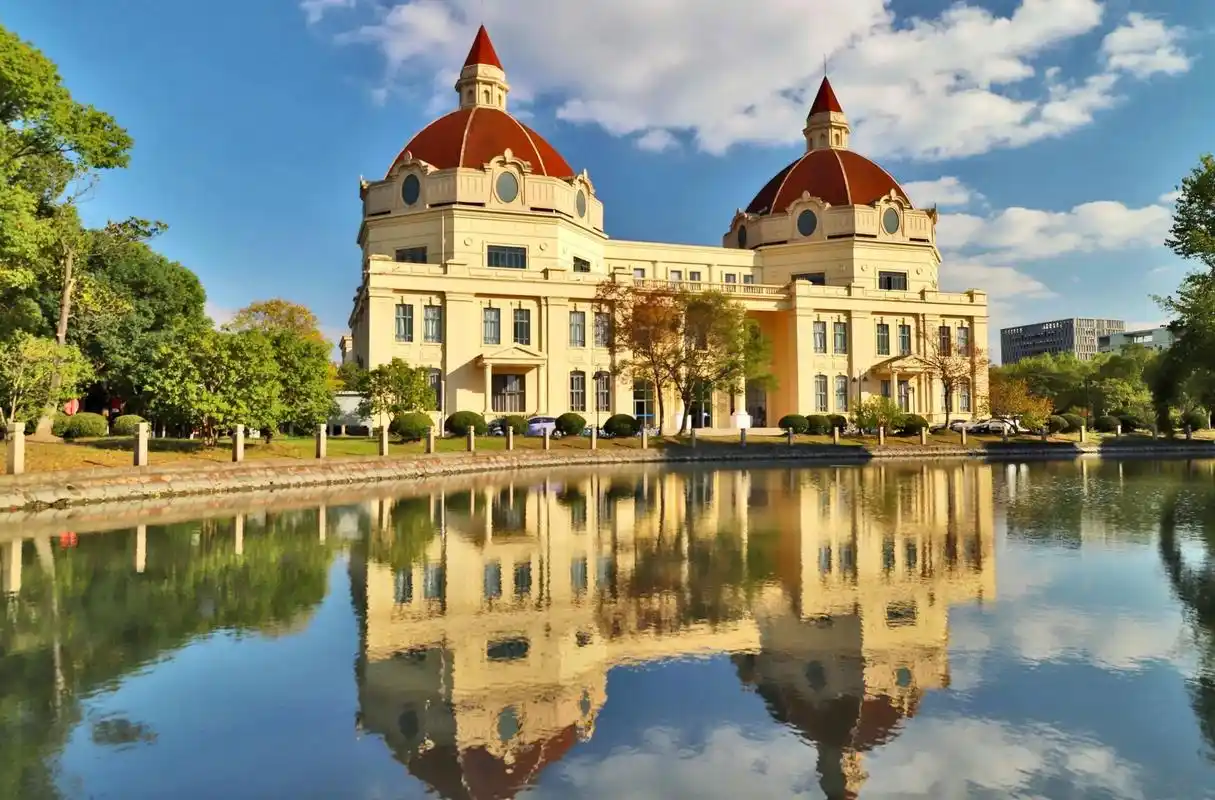
Shanghai International Studies University (SISU), commonly referred to as "Shangwai" or "SISU," is the first institution of higher education in foreign languages established after the founding of the People's Republic of China. It is a national public full-time regular institution of higher learning, a national key university directly under the Ministry of Education and jointly built with Shanghai Municipality. Its registered address is No. 550, West Dalian Road, Shanghai. SISU is a signatory university to the United Nations Memorandum of Understanding and a partner of the Directorate-General for Interpretation of the European Commission. It is also a member of the International Association of Conference Interpreters (CIUTI) and offers all six official language pairs of the United Nations, receiving the highest global rating from the International Association of Conference Interpreters (AIIC). Distinguished scholars such as Jiang Chunfang, Li Linsi, Xia Zhongyi, Fang Zhong, and Xu Zhongnian have taught at SISU. SISU traces its origins to the Shanghai Russian School attached to the East China People's Revolutionary University, founded in December 1949. In 1950, it was renamed the Foreign Language Specialized School attached to the East China People's Revolutionary University; in 1952, it became the Shanghai Russian Specialized School; in 1956, it was renamed Shanghai Foreign Language Institute; in 1963, it was listed as a national key university; and in 1994, it was renamed Shanghai International Studies University. In 1996, it was designated as a key university under China's "211 Project," and in 2017, it was selected for China's "Double First-Class" initiative. As of September 2024, SISU has two campuses, Hongkou and Songjiang, covering an area of 74.7 hectares. The university has 23 teaching faculties (departments), one national "Double First-Class" discipline, 56 undergraduate programs, 42 secondary discipline master's degree authorization points, 10 professional master's degree authorization points, 4 first-level discipline doctoral degree authorization points, 22 secondary discipline doctoral degree authorization points, 2 professional doctoral degree authorization points, 3 postdoctoral research stations, 1,601 faculty and staff members, and a total of 13,741 students of various types. After the founding of the People's Republic of China, to learn from and draw on the experience of Soviet socialist construction and to meet the urgent need for a large number of Russian-language talents, Comrade Chen Yi, then Mayor of Shanghai, advocated the establishment of a school to cultivate Russian-language talents based on the Fourth Department of the East China People's Revolutionary University. With the approval of the East China Bureau of the Central Committee of the Communist Party of China and the Shanghai Municipal Committee, the "Shanghai Russian School attached to the East China People's Revolutionary University" was officially established in December 1949, becoming the first higher education institution in foreign languages founded after the founding of the People's Republic of China. The Shanghai Municipal Committee appointed Comrade Jiang Chunfang, then president of the Shidai Publishing House, as the first president. The initial campus was located on Baoshan Road (formerly the Second College of Jinan University). The Shanghai Russian School was a foreign language university focusing on the study of Russian and Russian-Soviet literature, training students mainly as Russian interpreters, translators, and teachers. Following Comrade Chen Yi's instructions and to meet the needs of China's foreign affairs and foreign trade, the school added an English class in 1950 and was renamed the "Foreign Language Specialized School attached to the East China People's Revolutionary University," with the campus relocated to East Tiyuhui Road (formerly the First College of Jinan University). In April 1951, the school established the Department of Southeast Asian Languages, adding programs in Burmese, Vietnamese, and Indonesian. In March 1952, over 150 students from the Foreign Language Specialized School attached to the Political Department of the East China Military Region were merged into the school. By August 1952, the school offered five languages: Russian, English, Burmese, Vietnamese, and Indonesian. Starting from the second half of 1952, national higher education institutions implemented unified enrollment and began departmental adjustments. According to the instructions of the Ministry of Education, all faculty and students of the Department of Southeast Asian Languages were transferred to Peking University, leaving only the Russian program. In September of the same year, the school was renamed "Shanghai Russian Specialized School," and in November, it was again renamed "Shanghai Russian College," with a fixed three-year academic system. During this period, the school's teaching transitioned from training-style to formalized teaching, establishing and improving teaching organizations, abolishing the comprehensive Russian teaching and research office, and setting up 10 teaching and research groups for practical courses, translation, literary history, linguistics, etc. Unified syllabi were developed, and a student registration management system was established. By June 1956, the number of faculty members reached 241 (90 Soviet teachers and 151 Chinese teachers), and a total of 3,998 students had been enrolled in seven cohorts, with 2,087 graduating, supplying a number of Russian-language talents to various sectors of China. In 1956, the school was renamed "Shanghai Foreign Language Institute," adding programs in English, French, and German, with the academic system changed to four years. In 1958, the institute accepted commissions from the Shanghai Municipal Committee's Finance and Trade Department and the Shanghai Foreign Trade Bureau to establish the Department of Foreign Trade and Foreign Languages, offering six languages including English, German, and French. On September 12, 1963, with central approval, Shanghai Foreign Language Institute was listed as a national key university under the direct leadership of the Ministry of Education. On October 31, 1964, at the 148th plenary session of the State Council, signed by Premier Zhou Enlai, Comrade Wang Jiyu was appointed as the president of Shanghai Foreign Language Institute, becoming the first president appointed by the State Council. During this period, the institute also added a preparatory department for students going abroad and jointly established an affiliated foreign language school and an affiliated foreign language primary school with the Shanghai Municipal Education Bureau. After the start of the "Cultural Revolution," SISU began the so-called "suspension of classes to make revolution" in June 1966, rendering party and administrative work impossible and halting teaching and research. In 1970, the institute launched pilot classes. In 1972, it officially resumed enrollment. In 1973, it added a program in Albanian. This marked the beginning of the reconstruction of teaching order and the recovery of teaching work. In October 1976, with the fall of the "Gang of Four," the decade-long turmoil ended, and SISU's teaching work began to develop anew. In 1979, the institute restored the four-year academic system, began recruiting graduate students for degrees, reinstated the preparatory department for students going abroad, and established the Shanghai Foreign Language Education Press, various research institutions, a library and information center, and a foreign language examination center. In the same year, it jointly founded the Shanghai Foreign Language Institute Branch (later the International Business College of the former Shanghai University) with the Xuhui District Government.
Sources & verification
- Verification
- Not verified
- Verified on
- 2026-09-21
- Last updated
- 2026-09-24
- Source link
- studyinchina.net ↗
- Source notes
- Compiled from public StudyInChina information (source ID: 8791cec8-260d-402e-8bca-4ec33d8a1877)
Confirm requirements, funding and deadlines in the admissions office’s current announcement.