
University Scholarship
Nanjing University of Information Science and Technology (NUIST) Outstanding Freshman Scholarship
ClosedPartly verified
**1. Scholarship Content and Standards** To attract and encourage outstanding international students to pursue master's and doctoral programs at our university, Nanjing University of Information Science and Technology has established the Outstanding Freshman Scholarship. The scholarship covers full tuition fees. **2. Open Majors** All master's and doctoral programs at Nanjing University of Information Science and Technology are open for application. Chinese-taught master's programs have a duration of 3 years, English-taught master's programs have a duration of 2 years; doctoral programs have a duration of 3 years. **3. Applicant Qualifications** (1) Citizens of foreign nationality, friendly to China, in good health. (2) Comply with Chinese laws and regulations, university rules, good conduct, and meet NUIST admission requirements. (3) Positive learning attitude, excellent academic performance. (4) For master's degree applicants: hold a bachelor's degree, generally under 35 year
Tuition
- Scholarship type
- University Scholarship
- Degree level
- Bachelor / Master / PhD / Visiting Students
- Location
- Jiangsu · Nanjing
- Application deadline
- 2026-06-01
Overview
**1. Scholarship Content and Standards**
To attract and encourage outstanding international students to pursue master's and doctoral programs at our university
Nanjing University of Information Science and Technology has established the Outstanding Freshman Scholarship. The scholarship covers full tuition fees.
**2. Open Majors**
All master's and doctoral programs at Nanjing University of Information Science and Technology are open for application. Chinese-taught master's programs have a duration of 3 years
English-taught master's programs have a duration of 2 years
Funding coverage
Funding tiers
Eligibility may differ by tier. Check the applicable degree and requirements.
Standard funding
- Eligible degree
- Bachelor’s, Master’s, Doctoral, Visiting students
- Funding
- **1. Scholarship Coverage and Standards** Nanjing University of Information Science and Technology establishes the Outstanding New Student Scholarship to attract international master’s and doctoral applicants, waiving tuition. **2. Available Majors** All master’s and doctoral majors are open. Chinese-taught master’s study lasts three years, English-taught master’s study two years and doctoral study three years. **3. Eligibility** (1) Foreign citizenship, toward... [source ends here]
- Tier requirements
- ** (1) Foreign citizens friendly toward China and healthy. (2) Compliance with Chinese laws/regulations and university rules, good conduct, meeting Nanjing University of Information Science and Technology entry conditions. (3) Proper learning attitude and good grades. (4) Master’s: bachelor’s degree, generally no older than 35; doctoral: master’s degree, generally no older than 40. (5) Not concurrently receiving another Chinese Government Scholarship. **4. Application dates** Submit complete [source ends here]
Requirements & documents
Application dates & process
Application Deadline: 6/1 Review Cycle: Joint review by the China Scholarship Council and host university takes approximately 6–8 weeks
Universities & programs
Universities
About the university
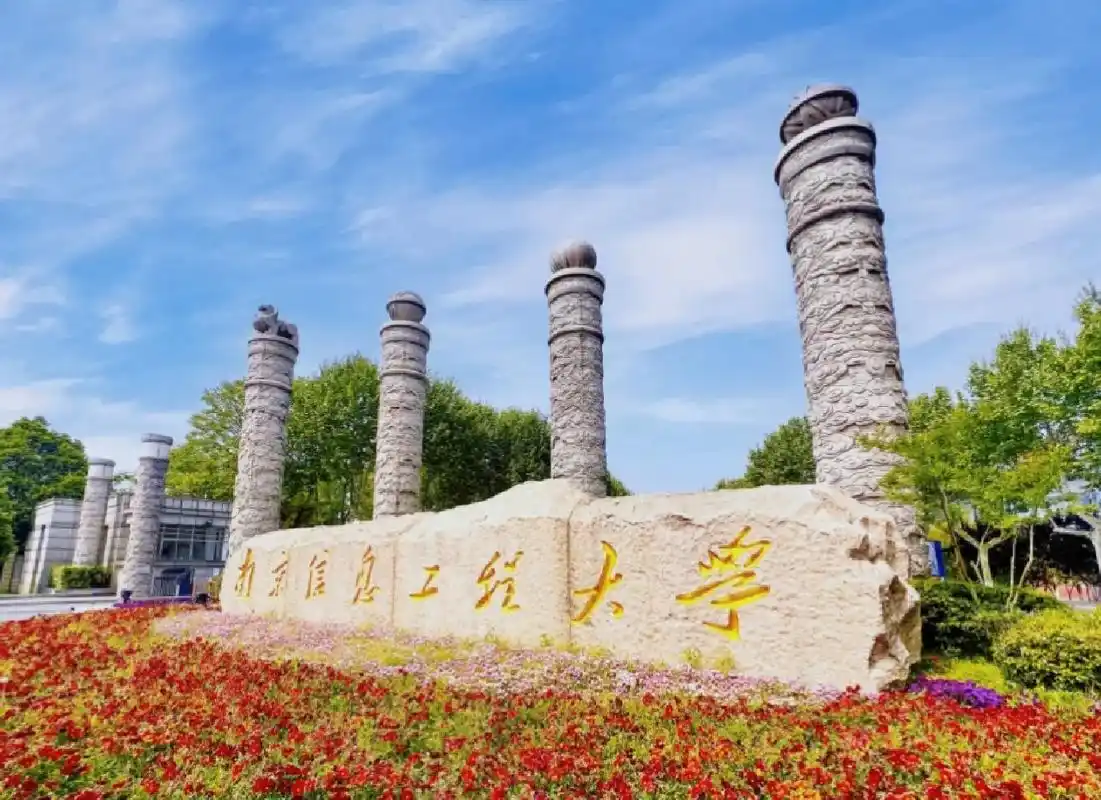
Nanjing University of Information Science and Technology (NUIST), also known as "Nanxinda," is a university jointly established by the central government and local authorities under the administration of Jiangsu Province. It is a national "Double First-Class" construction university, a member of the National High-Level University Public-Sponsored Graduate Program, a university under the Ministry of Education's "Excellent Engineer Education and Training Program," one of the first pilot institutions for the Ministry of Education's Emergency Management Safety Smart Learning Workshop, a Class A construction university under the Jiangsu High-Level University Construction Peak Plan, and one of the first batch of national demonstration universities for deepening innovation and entrepreneurship education reform. The university's predecessor was the Nanjing Institute of Meteorology, founded in 1960 under the former Central (Military) Meteorological Bureau. It was the first meteorological undergraduate institution established by the People's Republic of China. In 1978, it was designated as a national key university. In 2000, it was transferred from the China Meteorological Administration to the Jiangsu Provincial People's Government. In 2004, it was renamed Nanjing University of Information Science and Technology. In 2007, it was jointly established by the Jiangsu Provincial People's Government and the China Meteorological Administration. In 2012, it was jointly established by the Jiangsu Provincial People's Government, the Ministry of Education of the People's Republic of China, and the China Meteorological Administration. In 2014, it was jointly established by the Jiangsu Provincial People's Government and the State Oceanic Administration. In 2017, it was selected as one of the first batch of national "Double First-Class" first-class discipline construction universities. In 2018, it was selected as a key provincial university under the Jiangsu High-Level University Construction Plan. In 2021, it was selected as a Class A construction university under the Jiangsu High-Level University Construction Peak Plan. In 2022, it was selected for the second round of national "Double First-Class" construction. As of March 2025, the university has three campuses: the main campus, the Jinniu Lake New District, and the Wuxi campus, covering an area of over 2,000 mu. It has 25 professional schools, 86 undergraduate programs (excluding program directions), 11 first-level doctoral degree authorization points, 3 professional doctoral degree authorization categories, 28 first-level master's degree authorization points, 26 professional master's degree authorization categories, 6 postdoctoral research stations, over 2,400 full-time teachers, and approximately 39,700 full-time students. In 1920, Mr. Zhu Kezhen (Co-ching Chu) offered a meteorology course in the Department of Literature, History, and Geography at Nanjing Higher Normal School (renamed Central University in 1927, now Nanjing University). In 1921, Southeast University established the Department of Earth Sciences, with Mr. Zhu Kezhen as its chair. The department covered three disciplines: geology, geography, and meteorology. In January 1930, the Central University Senate resolved: "The Department of Earth Sciences shall be renamed the Department of Geology, and the Geography and Meteorology section shall be independently established as the Department of Geography." The Department of Geology was formally established (Note: In 1927, National Southeast University merged with eight other public schools and was renamed National Fourth Sun Yat-sen University. It was then renamed National Jiangsu University in February 1928, referred to simply as Jiangsu University from April 5, and on May 16, the Executive Yuan of the National Government resolved to rename Jiangsu University as National Central University). On August 25, 1954, Mr. Zhu Kezhen, then Vice President of the Chinese Academy of Sciences and President of the Chinese Meteorological Society, in his concluding speech at the Second National Congress of the Chinese Meteorological Society, first called on the education authorities to establish a hydrometeorological college. In July 1956, Tu Changwang stated in his speech at the Third Session of the First National People's Congress: "There is an extreme shortage of senior technical cadres. Only 104 university graduates are in the national meteorological service system. We hope the Ministry of Higher Education will expand enrollment in meteorology departments or establish a meteorological college."
Sources & verification
- Verification
- Partly verified
- Verified on
- 2026-05-10
- Last updated
- 2026-09-24
- Source link
- www.campuschina.org ↗
- Source notes
- Official CampusChina guide (program code: 123048)
Confirm requirements, funding and deadlines in the admissions office’s current announcement.