
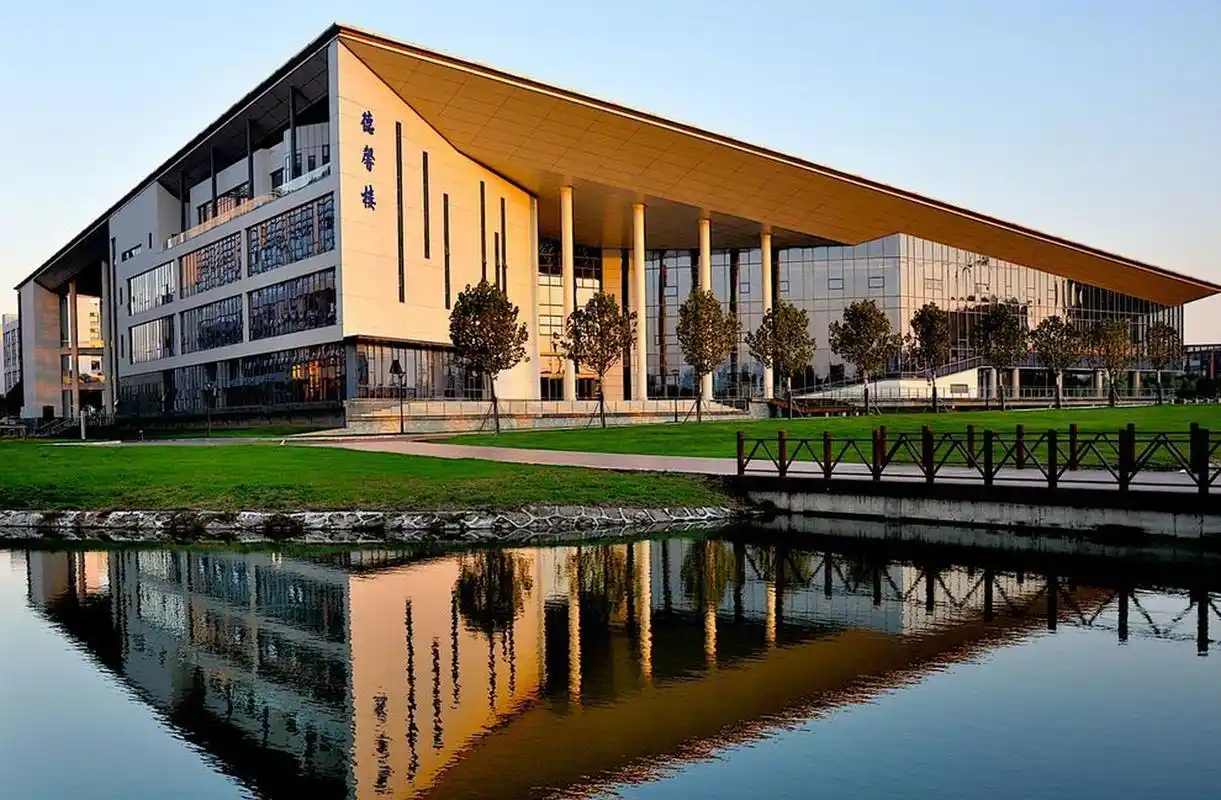
University Scholarship
Nanjing Medical University Scholarship
Application status unknownPartly verified
I. Scholarship Details | Student Category | Scholarship Category | Distribution Ratio* | Amount (RMB/person) | | --- | --- | --- | --- | | Undergraduate, Clinical Medicine (English-taught) | NJMU New Student Full Tuition Scholarship | 5% | 34,000 | | NJMU New Student Half Tuition Scholarship | 10% | 17,000 | | NJMU New Student 1/4 Tuition Scholarship | 15% | 8,500 | | NJMU New Student General Freshman Scholarship | 70% | 5,000 | | Undergraduate, Clinical Medicine (Chinese-taught) | NJMU New Student Full Tuition Scholarship | 50% | 30,000 | | NJMU New Student Half Tuition Scholarship | 40% | 15,000 | | NJMU New Student 1/4 Tuition Scholarship | 10% | 7,500 | | Master's Degree Students | NJMU Full Tuition Scholarship | 10% | 35,000 | | NJMU Half Tuition Scholarship | 90% | 17,500 | | Doctoral Degree Students | NJMU Full Tuition Scholarship | 100% | 38,000 | II. Open Majors Undergraduate: Clinical Medicine
Tuition
- Scholarship type
- University Scholarship
- Degree level
- Bachelor / Master / PhD / Visiting Students
- Location
- Jiangsu · Nanjing
- Application deadline
- Date to be confirmed
Overview
I. Scholarship Details
| Student Category | Scholarship Category | Distribution Ratio* | Amount (RMB/person) |
| --- | --- | --- | --- |
| Undergraduate
Clinical Medicine (English-taught) | NJMU New Student Full Tuition Scholarship | 5% | 34
000 |
Funding coverage
Funding tiers
Eligibility may differ by tier. Check the applicable degree and requirements.
Full funding
- Eligible degree
- Bachelor’s, Master’s, Doctoral, Visiting students
- Funding
- I. Scholarship Coverage | Student Category | Scholarship Category | Award Proportion* | Amount (RMB/person) | | --- | --- | --- | --- | | Undergraduate, Clinical Medicine (English-taught) | Nanjing Medical University Freshman Full Tuition Scholarship | 5% | 34,000 | | Nanjing Medical University Freshman Half Tuition Scholarship | 10% | 17,000 | | | Nanjing Medical University Freshman Quarter Tuition Scholarship | 15% | 8,500 | | | [source table ends here]
- Tier requirements
- **A. Undergraduate requirements:** 1. Aged18 or older and30 or younger. 2. Healthy, meeting the major’s admission conditions. 3. Compliance with Chinese laws/regulations and Nanjing Medical University rules. 4. Chinese-taught Clinical Medicine: HSK4 or higher certificate; otherwise take the university’s Chinese examination. 5. High school graduation or above; high school mathematics, physics, chemistry and biology meet university standards; competitive admission. **B. Master’s:** non-Chinese citizens age30 or younger, recognized Chinese/overseas bachelor’s degree, same/closely related undergraduate major. Majors marked “*” have research and professional modes. Research mode trains within the discipline and awards a Master of Medicine; professional mode involves6-24 months’ rotation within second-level disciplines, at least 9 months in the main discipline, and awards a Master of Clinical Medicine. Professional-mode applicants should pass HSK4 or above; otherwise take one year of Chinese preparation (first-year full tuition scholarship available). Enter professional training only after HSK4. If still unsuccessful after one year, transfer to research mode or take another year or more until passing HSK4. **C. Doctoral:** non-Chinese citizens age35 or younger, recognized Chinese/overseas master’s degree in the same/closely related major. Research mode awards a Ph.D in Medicine; professional mode an M.D in Clinical Medicine. M.D applicants’ undergraduate/master’s majors must be Clinical Medicine or Stomatology; those with master’s degrees obtained outside mainland China must already hold medical practitioner qualification.
Requirements & documents
Application dates & process
Review Cycle: Joint review by the China Scholarship Council and host university takes approximately 6–8 weeks
Universities & programs
Universities
About the university
Nanjing Medical University, located in Nanjing, Jiangsu Province, is a medical university jointly established by the Ministry of Education, the National Health Commission, and the Jiangsu Provincial Government. It is a Class A institution under the Jiangsu High-Level University Construction Peak Plan, a national "Double First-Class" construction university, a university for the construction of high-level public health schools under the Ministry of Education, one of China's first batch of medical humanities quality education bases for higher education institutions, and a base for the Top-Notch Student Training Program 2.0 in basic disciplines. It has received multiple honors, including being recognized as an advanced collective for key laboratory support units, and is a pilot unit for national comprehensive professional reform and the "Excellent Doctor Education and Training Plan." Founded in 1934 as Jiangsu Provincial Medical Administration College, it was renamed National Jiangsu Medical College during the War of Resistance. In 1957, it moved from Zhenjiang to Nanjing and was renamed Nanjing Medical College. In 1962, it was listed among the first batch of six-year medical and pharmaceutical institutions nationwide. In 1981, it was approved as one of the first batch of doctoral and master's degree-granting units in China. In 1993, it was renamed Nanjing Medical University. In February 2022, the university entered the ranks of national "Double First-Class" construction universities, with public health and preventive medicine selected for first-class discipline construction. As of January 2026, the university has the Jiangning Campus, Wutai Campus, and Changzhou Campus (under planning). The Wutai Campus covers 120 mu, with 19 schools and 25 undergraduate programs. It has 7 first-level doctoral degree authorization points, 54 second-level doctoral degree authorization points, 6 interdisciplinary doctoral degree authorization points, 6 professional doctoral degree authorization points, 12 first-level master's degree authorization points, 63 second-level master's degree authorization points, and 6 postdoctoral research stations. The main campus has over 2,000 faculty and staff, with a total student population of nearly 22,000. It has 8 academicians of the Chinese Academy of Engineering and Chinese Academy of Sciences (including workstations), 1 foreign academician of the U.S. National Academy of Medicine, and 2 members of the Chinese Academy of Medical Sciences. Fourteen disciplines rank among the top 1% globally in ESI. In May 1934, the Jiangsu Provincial Government Committee decided to establish Jiangsu Provincial Medical Administration College after in-depth discussions, offering training courses in healthcare, health education, and health administration. The government allocated 194 mu of land at Beigu Mountain in Zhenjiang for the college's buildings. Just three months later, the college began formal enrollment, admitting 176 new students, marking its official operation. In the following years, the college focused on teaching, research, and social services. In 1935, it published the "Medical Administration Weekly" and "Health Education Weekly," providing new platforms for medical exchange. It also organized faculty and students to vaccinate local residents in Zhenjiang and surrounding areas, carry out epidemic prevention injections, and provide medical services to schools, rural areas, and factories. In 1935, the college built a medicinal plant trial field and completed the construction of a science experiment hall in September. In the summer of 1938, due to the impact of the Japanese invasion, the college moved westward, first to Yuanling in Hunan, then to Guiyang in December, using the facilities of Guiyang Dade School for teaching. During this period, the Medical Department of Private Nantong College sought to merge with Jiangsu Provincial Medical Administration College to enhance educational resources. With approval from the Ministry of Education and the Supreme National Defense Council, the two schools merged in Yuanling, Hunan, and reorganized into National Jiangsu Medical College. In January 1939, the school was required by the Ministry of Education to relocate to Chongqing. On May 23, classes resumed in Beibei, Chongqing, where faculty and students served the public with medical expertise. The school buildings stood by the Jialing River, earning the affectionate nickname "Su Yi Cun." From 1940 to 1942, the college achieved significant research results, establishing a public health office, a public health teaching and research section, the Chinese Institute of Preventive Medicine, and the Institute of Parasitology. These institutions greatly enhanced the college's research capabilities and social service capacity. In August 1942, the college began enrolling master's students, marking a new step in medical education. On September 19, 1946, the college moved back to its original site in Zhenjiang from Beibei, Chongqing, and underwent renovations. In December, classes officially resumed, continuing to cultivate outstanding talent for the medical field. After the founding of the People's Republic of China, in July 1951, the Affiliated Nursing School of Jiangsu Medical College merged with the Southern Jiangsu Zhenjiang Senior Midwifery School, with the new school located at the original site of the midwifery school. By 1952, the school expanded further and also operated the Zhenjiang Medical School. In December 1954, Jiangsu Medical College merged with the Nanjing Medical School. In the winter of the same year, to promote medical research, the school established a Medical Science Research Committee.
Sources & verification
- Verification
- Partly verified
- Verified on
- 2026-05-10
- Last updated
- 2026-09-24
- Source link
- www.campuschina.org ↗
- Source notes
- Official CampusChina guide (program code: 121900)
Confirm requirements, funding and deadlines in the admissions office’s current announcement.